
Case study
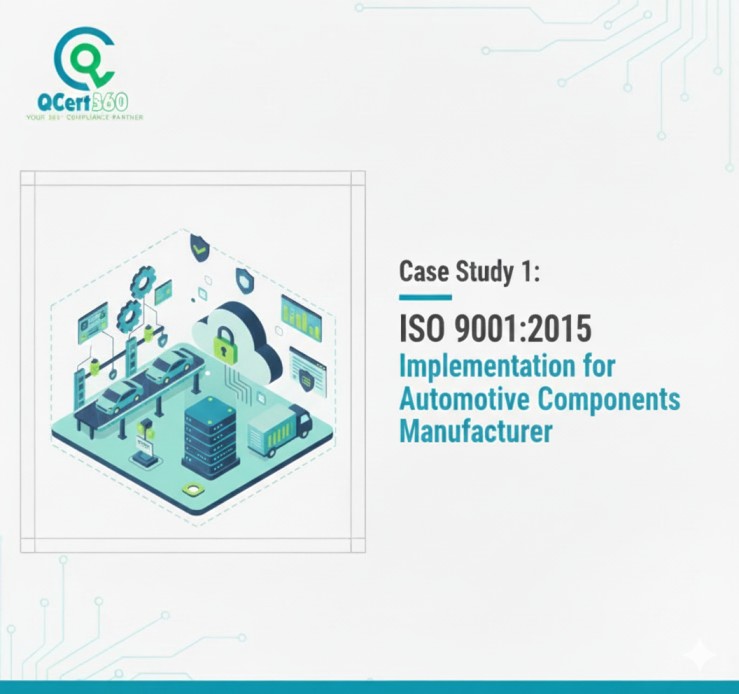
Case Study 1: ISO 9001:2015 Implementation for Automotive Components Manufacturer
Client Overview:
AlphaTech Precision Components is a mid-sized automotive parts manufacturer supplying high-volume assemblies to Tier-1 OEMs across multiple regions. With 250 employees and a rapidly expanding order book, the company was under growing pressure to stabilize quality, reduce rework, and align operations with international standards.
Although demand was strong, AlphaTech struggled to maintain consistency across production lines. Customer complaints were increasing, inspection data lacked structure, and the absence of documented procedures made every shift dependent on operator experience rather than controlled processes.
Challenges Before ISO 9001 Implementation
A detailed assessment highlighted several systemic issues affecting product quality and customer satisfaction:
Operational Pain Points
Rising rejection rates from OEM clients
No standard work instructions or documented processes
Customer complaints increasing by 18% year-on-year
Lack of internal audit structure or corrective action tracking
Production delays due to inconsistent procedures and unclear responsibilities
These challenges became a barrier to scaling operations and winning new OEM contracts. AlphaTech needed a structured Quality Management System (QMS) aligned with ISO 9001:2015 to restore control, improve consistency, and regain customer trust.
Approach: Qcert360’s Structured ISO 9001 Implementation
The transformation followed a step-by-step model built around ISO 9001:2015 requirements.
1. Comprehensive Gap Assessment
Our team conducted a full QMS audit covering production, inspection, material handling, procurement, storage, and management processes.
Key Findings:
41 compliance gaps identified
Critical gaps in documentation, calibration, CAPA, and leadership oversight
Inconsistent inspection data and unclear acceptance criteria
No preventive action mechanism in place
We used this assessment to build a precise, time-bound implementation roadmap.
2. Process Mapping & Documentation Development
Documentation was redesigned from the ground up to bring structure and clarity.
Deliverables Created
Quality Manual compliant with ISO 9001:2015
35 Standard Operating Procedures (SOPs)
Process flowcharts for production, inspection, NC handling, and dispatch
Traceability and calibration logs
Corrective & Preventive Action (CAPA) framework
This documentation replaced informal practices with standardized, repeatable processes.
3. Training & Capability Building
A strong QMS only works when people understand it. We focused on developing internal competence.
Training Highlights
Quality awareness programs for 180 employees
Internal Auditor Training for QA team members
Leadership coaching on QMS governance, risk-based thinking, and KPI monitoring
These interventions ensured everyone—from operators to managers—understood their role in maintaining quality.
4. Implementation, Internal Audits & Corrective Actions
To embed the new system, we executed a structured implementation plan.
Key Activities
Two full-cycle internal audits conducted across all departments
Root-cause analysis integrated using 5 Why + Ishikawa tools
Nonconformities closed with documented corrective actions
Calibration and inspection systems fully standardized
Management Review Meetings conducted as per ISO 9001:2015 requirements
By the time of the external audit, the system was stable, traceable, and fully compliant.
Before vs After ISO 9001 Implementation
| Area | Before ISO 9001 | After ISO 9001 Implementation |
|---|---|---|
| Product Quality | High rejection rates | 32% reduction in customer complaints |
| Process Control | No standardized documentation | 35 SOPs + complete QMS documentation |
| Production Consistency | Variations across shifts | 25% improvement in consistency |
| Internal Audits | No structured audit system | Two full internal audits + ongoing CAPA |
| External Audit | High NC risk | Zero major nonconformities |
| Customer Trust | Frequent complaints | Faster approvals + improved OEM ratings |
Results Achieved
The transformation produced measurable improvements within weeks.
Key Outcomes
32% reduction in customer complaints within three months
25% improvement in production consistency due to standardized processes
Zero major nonconformities during the certification audit
ISO 9001:2015 certification achieved in just 90 days
Strengthened supplier evaluation scores from OEM clients
Improved data-driven decision-making through KPIs and audit insights
AlphaTech not only earned certification—it built a sustainable, scalable quality culture.
Conclusion
This case shows how a structured ISO 9001:2015 implementation can transform a manufacturing operation. AlphaTech moved from reactive firefighting to proactive process control, enabling them to meet growing OEM expectations and operate with greater confidence.
If your manufacturing facility is facing similar challenges—defects, inconsistency, documentation gaps, or audit failures—Qcert360 can help you establish a robust QMS that delivers measurable performance improvements.
CTA: Ready to Strengthen Your Manufacturing Quality System?
Qcert360 provides end-to-end ISO 9001 consulting, documentation, training, and audit support for manufacturing companies of all sizes.
✔ Request a detailed proposal
✔ Book a free readiness assessment
✔ Upload your documents for a quick compliance review
Drop an email at – contact@qcert360.com
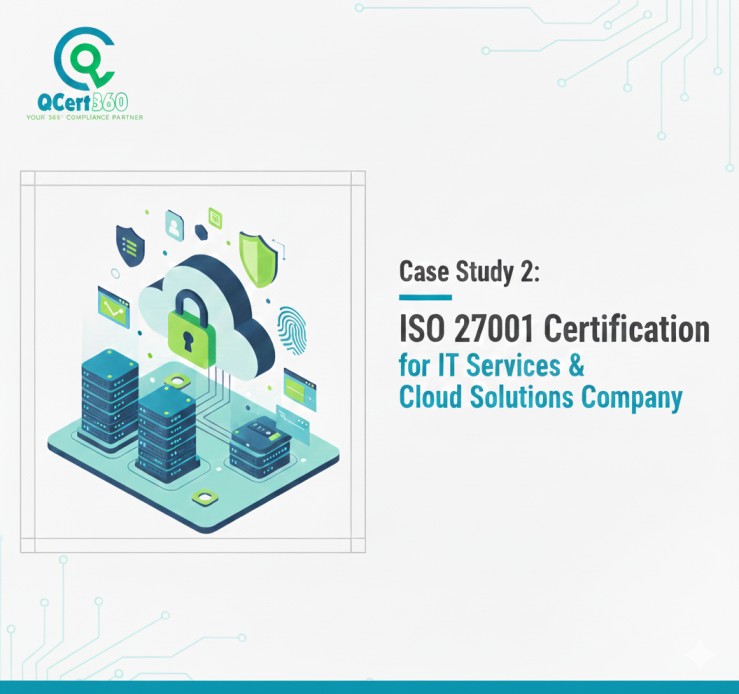
Case Study 2: Case Study 2: ISO 27001 Certification for IT Services & Cloud Solutions Company
Client Overview:
NexGen Software Labs is a growing IT services and cloud solutions provider working with clients across Europe, the Middle East, and Southeast Asia. Their service portfolio includes managed IT services, application development, DevOps support, and cloud infrastructure management.
As enterprise clients became stricter about cybersecurity compliance, NexGen started facing repeated requests for evidence of ISO 27001 certification as part of vendor evaluation and onboarding. Without a formal Information Security Management System (ISMS), they risked losing competitive deals.
To stay ahead, the leadership team engaged Qcert360 to design and implement a fully compliant ISMS aligned with global best practices.
Key Challenges Before ISMS implementation
1. No formal ISMS framework
Security practices existed, but none were standardized, documented, or measured.
2. Weak access control mechanisms
User privileges were inconsistently managed across systems, increasing risks of unauthorized access.
3. No defined risk assessment methodology
Security decisions were reactive instead of data-driven.
4. Limited incident response capability
Teams lacked a unified playbook for handling breaches, outages, or suspicious activity.
5. Unreliable backup and restoration practices
Backup frequency varied across departments, and no DRP (Disaster Recovery Plan) existed.
Challenge Summary Table
| Area | Observed Gaps | Business Risk |
|---|---|---|
| ISMS | No formal structure | Inconsistent security posture |
| Access Control | Weak privilege management | Unauthorized access exposure |
| Risk Assessment | No methodology | Unable to prioritize threats |
| Incident Response | Limited processes | Delayed detection and recovery |
| Backup & DR | Inconsistent backups | Data loss and service disruption |
Our Approach
Qcert360 implemented a step-by-step ISO 27001 roadmap designed for IT service providers handling sensitive client data.
1. ISMS Scope Definition
We defined the scope to include all cloud services, development teams, IT operations, and customer support environments. This helped NexGen establish clear boundaries, assets, and responsible stakeholders.
2. Comprehensive Risk Assessment
A structured assessment was performed across 46 information assets, covering:
- Cloud servers
- Source code repositories
- Network devices
- Customer support systems
- Third-party integrations
We evaluated threats, vulnerabilities, and impacts, then developed a risk treatment plan aligned with Annex A controls.
Risk Management Summary Table
| Stage | Outcome |
|---|---|
| Asset Identification | 46 critical IT assets listed |
| Risk Evaluation | Likelihood-impact scoring applied |
| Control Mapping | Annex A (93 controls) mapped to risks |
| Treatment Plan | 100% of high risks addressed |
3. Deployment of Policies and Controls
To strengthen NexGen’s security posture, we created and implemented:
- Information security policy
- Data protection and classification procedures
- Access governance workflows
- Secure coding guidelines
- Backup and restoration SOPs
- A complete incident response framework
All controls were designed to be easy for teams to follow and scalable for future growth.
4. Security Awareness and Workforce Training
Since employees often play the biggest role in preventing breaches, we ran:
- Phishing simulation campaigns
- Secure handling of customer data training
- Guidelines for OWASP-aligned secure coding
- ISMS responsibilities workshops
The result was a measurable improvement in user behavior and security culture.
5. Internal Audit and Audit Readiness
We conducted a thorough internal audit to ensure compliance before certification. Teams were prepared for:
- Stage 1 documentation audit
- Stage 2 implementation and effectiveness audit
Any minor gaps were closed quickly, ensuring NexGen entered the certification phase with confidence.
Results Achieved
NexGen saw meaningful improvements from both a security and business perspective.
Audit Outcome
Zero major nonconformities
All controls implemented and verified successfully
Business Impact
12% increase in global client onboarding thanks to stronger compliance posture
Reduced vulnerabilities and tighter access control
Improved backup reliability and incident response readiness
A more mature, resilient security culture across teams
Post-Certification Benefits Table
| Improvement Area | Before ISO 27001 | After ISO 27001 Certification |
|---|---|---|
| Client Confidence | Frequent security questionnaires | Faster vendor approvals |
| Risk Visibility | Limited | Full asset-risk mapping |
| Access Control | Inconsistent | Role-based, audited |
| Incident Response | Reactive | Structured and rehearsed |
| Backup Strategy | Irregular | Standardized and verified |
| Culture | Low security awareness | Organization-wide involvement |
Conclusion
What stands out in NexGen’s journey is how quickly a structured approach to information security can reshape both internal operations and market perception. Once the ISO 27001 framework was in place, teams had clearer responsibilities, risks were no longer guesswork, and clients finally had the assurance they needed to trust NexGen with mission-critical workloads. The certification didn’t just tighten controls; it opened doors to new international contracts, reduced compliance friction during vendor evaluations, and established a long-term foundation for scalable, secure growth.
For IT providers handling sensitive data, NexGen’s experience shows that building a mature ISMS isn’t just about passing an audit. It’s about elevating security to a business advantage—something your clients can see, feel, and rely on. If you’re ready to move in the same direction, Qcert360 can guide you through every step.
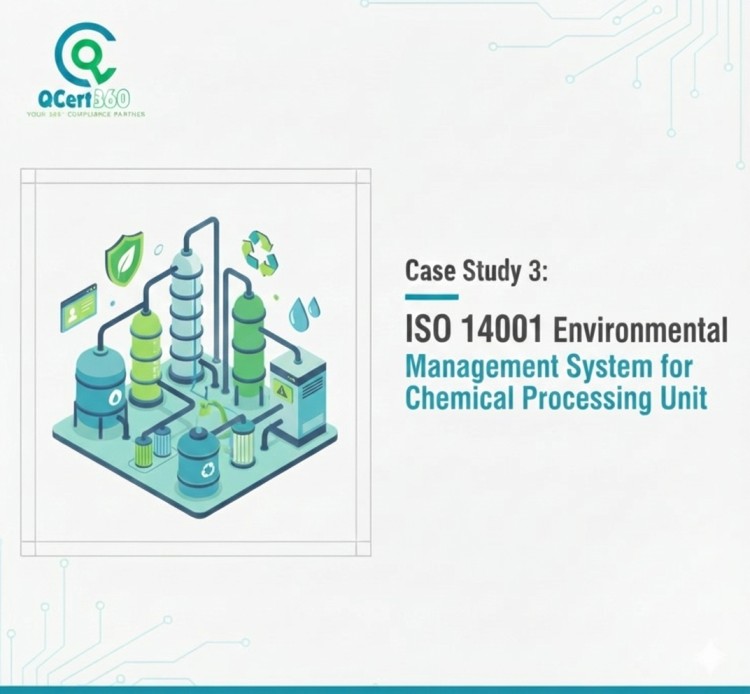
Case Study 3: ISO 14001 Environmental Management System for Chemical Processing Unit
Client Overview:
EcoChem Industries operates a mid-sized chemical blending and packaging facility with 180 employees. The plant handles solvents, additives, and industrial chemicals for clients across manufacturing and automotive sectors. Over the years, rapid expansion and outdated processes resulted in environmental noncompliance, attracting regulatory pressure and rising operational risks.
Management realized that without a structured ISO 14001 Environmental Management System (EMS), the company would continue facing waste inefficiencies, chemical hazards, and possible penalties. They partnered with Qcert360 to rebuild their environmental management framework from the ground up.
Key Challenges
Before starting the project, several environmental gaps were identified that affected both compliance and sustainability performance.
1. Waste Disposal Inefficiencies
Waste segregation and disposal practices varied between departments, leading to contamination risks and increased disposal costs.
2. Poor Chemical Storage Practices
Containers were inconsistently labeled, and spill-prone storage areas lacked proper secondary containment.
3. High Energy Consumption
Aging equipment and unchecked utility usage resulted in unnecessary energy losses.
4. Lack of Environmental Monitoring
No KPIs, no tracking system, and no environmental performance reporting existed, making it impossible to measure improvement.
Challenge Summary Table
| Area | Observed Gap | Environmental Risk |
|---|---|---|
| Waste Management | Inefficient handling and mixing of waste | Pollution, high disposal costs |
| Chemical Storage | Poor segregation, no spill controls | Soil and groundwater contamination |
| Energy Use | Outdated machinery, no monitoring | Excessive carbon footprint |
| Monitoring | No data or KPIs | Inability to comply or improve |
Our Approach
Qcert360 deployed an ISO 14001 implementation roadmap tailored to the unique risks of chemical handling, storage, and waste generation.
1. Environmental Aspect & Impact Study
We conducted a detailed assessment of every operational process—from raw material unloading to mixing, packaging, warehousing, and effluent discharge. Each activity was analysed for:
Air emissions
Water contamination risks
Chemical spill probability
Waste generation patterns
Noise and energy consumption
This study helped EcoChem prioritize high-risk activities and target the most impactful improvements.
Aspect & Impact Summary Table
| Process | Environmental Aspect | Potential Impact | Risk Level |
|---|---|---|---|
| Blending Operations | VOC emissions | Air pollution | High |
| Packaging | Chemical leaks | Soil contamination | Medium |
| Storage Area | Poor containment | Groundwater contamination | High |
| Utilities | High energy usage | Increased carbon footprint | Medium |
2. EMS Policy & Documentation Development
Once the high-risk areas were clear, we built a structured and audit-ready documentation system, including:
A clear Environmental Policy aligned with sustainability commitments
Standard Operating Procedures (SOPs) for waste handling, spill response, material storage, and hazardous waste collection
Emergency response protocols
Roles and responsibilities for the Environmental Management Team
The documentation helped standardize processes across departments, reducing human error.
3. Legal Compliance Checklist
Chemical facilities operate under strict environmental regulations. We created a detailed legal compliance register covering:
Hazardous waste rules
Air and water quality standards
Chemical storage requirements
Emergency response regulations
Environmental reporting and record-keeping obligations
A live compliance tracker was introduced to help teams update, record, and demonstrate compliance during regulatory inspections.
4. Monitoring & Measurement Framework
To build a culture of measurable improvement, we introduced KPIs and monitoring systems for:
Energy consumption per batch
Volume and type of waste generated
Emission levels
Chemical usage efficiency
Spill incidents and response time
Automated logs and dashboards were added so management could review trends monthly and act before issues escalated.
Performance Monitoring Table
| KPI | Baseline | After EMS Implementation | Improvement |
|---|---|---|---|
| Energy Consumption | High and untracked | Monitored, optimized | 20% reduction |
| Waste Handling Efficiency | Poor segregation | SOP-aligned segregation | 35% improvement |
| Spill Incidents | Frequent minor spills | Controlled and reduced | Near-zero |
| Regulatory Audit Score | Noncompliant | Fully compliant | Clean audit |
Results
EcoChem saw significant operational and environmental improvements within just four months.
Environmental Performance Gains
- 20% reduction in energy consumption through equipment optimization and usage controls
- 35% improvement in waste handling efficiency due to proper segregation and SOP-driven practices
- Significant reduction in spill risks because of improved storage layouts and containment systems
Compliance Improvements
- Passed a regulatory environmental audit with zero nonconformities for the first time in three years
- Achieved ISO 14001 certification in only four months, despite being a high-risk chemical processing unit
Conclusion
EcoChem’s turnaround shows what happens when a chemical processing unit takes environmental management seriously and backs it with a structured ISO 14001 framework. Once the EMS was fully in place, waste streams became predictable, spills became rare, energy use dropped, and regulatory pressure disappeared. The certification didn’t just check a compliance box—it reshaped how the company operated, made audits easier to navigate, and positioned EcoChem as a responsible supplier in a sector where sustainability expectations keep rising.
If you’re running a facility that struggles with environmental compliance, fluctuating waste costs, or energy inefficiencies, EcoChem’s journey is a reminder that change doesn’t have to be slow or complicated. With the right guidance, you can build an EMS that reduces risks, strengthens credibility, and pays for itself through operational savings.
Ready to Strengthen Your Environmental Performance?
Let Qcert360 Help You:
Build a compliant, audit-ready ISO 14001 Environmental Management System
Reduce waste, improve energy efficiency, and cut operational risks
Navigate regulatory requirements with confidence
Achieve certification faster with expert-led support
Take the Next Step
Book a free consultation to discuss your facility’s environmental challenges and explore how you can achieve ISO 14001 certification smoothly and efficiently.
Schedule a call: https://calendly.com/qcert360/new-meeting
Email us: info@qcert360.com
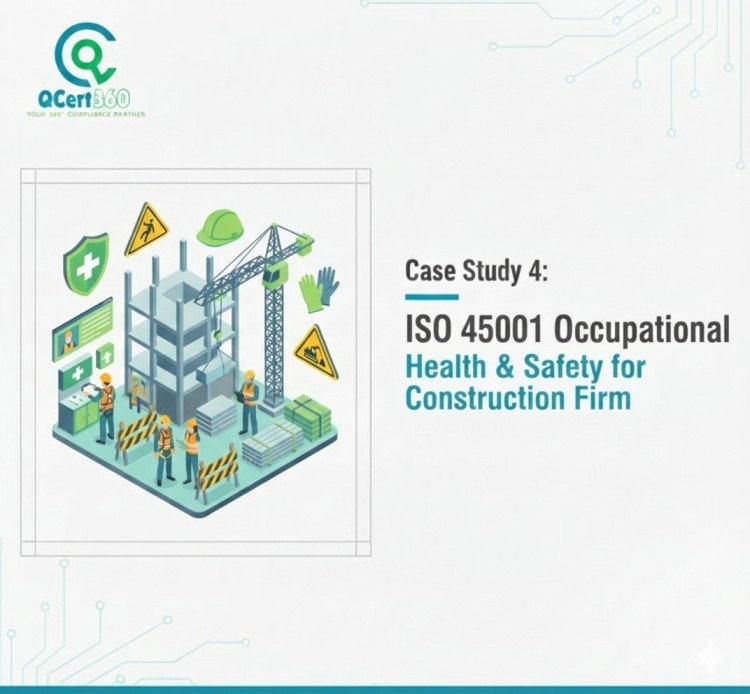
Case Study 4: ISO 45001 Occupational Health & Safety for Construction Firm
Client Overview
BuildRight Infra Projects manages multiple mid- to large-scale construction sites across India, handling residential, commercial, and infrastructure developments. As the number of active projects grew, so did the complexity of their operations. Unfortunately, this expansion also led to a spike in workplace incidents—ranging from minor injuries to serious accidents.
Frequent delays, regulatory penalties, and high employee turnover started affecting project delivery timelines and client confidence. Leadership realized that without a structured ISO 45001 Occupational Health & Safety Management System (OHSMS), maintaining safe and compliant operations across sites would remain a constant struggle.
Qcert360 was brought in to help BuildRight create a scalable safety management framework that could work consistently across all project sites.
Key Challenges faced by the client
Before implementing ISO 45001, several safety issues were identified that directly affected workforce health, legal compliance, and operational timelines.
1. High Incident Rates
Recurring injuries due to unsafe work practices, inadequate supervision, and improper use of equipment.
2. No Hazard Identification System
Supervisors lacked a formal method to spot and record hazards before they led to incidents.
3. Limited Worker Safety Training
Training programs were inconsistent and not aligned with job-specific risks.
4. Poor Emergency Response Preparedness
Workers were unaware of basic emergency procedures, evacuation routes, and first-aid protocols.
Challenge Summary Table
| Area | Observed Issue | Safety Impact |
|---|---|---|
| Incident Rates | Frequent injuries | Project delays, penalties |
| Hazard Identification | No structured system | High-risk work unchecked |
| Training | Inconsistent sessions | Increased unsafe behavior |
| Emergency Preparedness | No drills or response plans | High severity of accidents |
Our Approach
Qcert360 implemented a structured ISO 45001 framework designed specifically for high-risk construction environments.
1. OHS Gap Assessment
A full diagnostic was conducted across multiple sites, covering:
Existing safety policy gaps
Inadequate incident reporting practices
Noncompliance in PPE availability and usage
Unsafe scaffolding and lifting practices
Housekeeping issues in high-activity zones
This assessment created a baseline for improvement and helped prioritize urgent corrective actions.
2. Risk Assessment & Hazard Control
A robust risk management system was introduced to move the company from reactive firefighting to proactive prevention.
Key Activities:
Job Safety Analysis (JSA):
Breaking down tasks to identify risks for excavation, concreting, electrical work, and working at heights.Work Permit System:
Mandatory permits for hot work, confined space entry, lifting operations, and electrical isolation.PPE Compliance Monitoring:
Daily supervision checks and weekly PPE audits to ensure workers consistently followed safety requirements.
Risk Management Table
| Process / Activity | Identified Hazard | Control Implemented |
|---|---|---|
| Working at Heights | Fall risk | Harnesses, guardrails, JSA |
| Hot Work | Fire hazard | Hot work permit, fire watch |
| Scaffolding | Collapse risk | Scaffolding inspection checklist |
| Material Handling | Crushing injuries | Trained riggers, signaling protocol |
3. Workforce Training & Awareness Programs
To build a sustainable safety culture, we rolled out a structured training plan for workers, supervisors, and engineers.
Training included:
Mandatory safety induction for all new workers
Daily toolbox talks focused on site-specific risks
Fire drills and evacuation simulations
First-aid training for designated responders
Visual safety communication boards at each site
These programs led to measurable improvements in hazard reporting and safe work behavior.
4. Internal Audits & Compliance Tracking
Consistent oversight was essential for a multi-site operation.
Weekly site safety audits were conducted using standardized checklists
Monthly compliance scorecards were introduced to evaluate site-level performance
Nonconformities were tracked with corrective action deadlines
Management reviews helped maintain accountability and continuous improvement
This structure ensured that improvements were not one-time fixes but part of an ongoing OHSMS.
Results
The implementation of ISO 45001 delivered measurable operational and cultural improvements across all BuildRight sites.
Performance Improvements
43% reduction in workplace accidents within the first five months
Improved near-miss reporting, helping prevent major incidents
Strengthened contractor management and supervision
Compliance Achievements
100% compliance with statutory safety requirements
Strong safety records during regulatory inspections
ISO 45001 certification achieved in just 5 months
Cultural Transformation
Workers became more proactive in reporting hazards
Supervisors demonstrated stronger ownership of safety responsibilities
Safety became a visible part of daily planning and decision-making
Impact Summary Table
| Metric | Before | After ISO 45001 |
|---|---|---|
| Accident Rate | High | 43% reduction |
| Regulatory Compliance | Inconsistent | 100% compliance |
| Worker Training | Minimal | Structured and ongoing |
| Emergency Preparedness | Poor | Fully operational |
Conclusion
BuildRight’s experience shows how quickly a construction company can turn safety around when it commits to a structured ISO 45001 framework. Once the gaps were identified and real controls were put in place, incident rates dropped, supervisors took ownership of risk, and workers finally had the training and clarity they needed to stay safe. The certification didn’t just clean up compliance issues—it boosted morale, reduced downtime, and helped the company deliver projects with greater reliability and confidence.
For a high-risk industry like construction, this isn’t a nice-to-have. It’s the difference between constant firefighting and a safety culture that protects people, timelines, and profitability.
Ready to Build a Safer, Compliant Construction Operation?
How Qcert360 Helps You Succeed
Full ISO 45001 implementation from gap assessment to certification
Site-specific hazard identification and risk control strategies
Training programs tailored for workers, engineers, and supervisors
Audit-ready documentation and compliance tracking tools
Fast, practical, and scalable OHSMS solutions
Start Your Safety Transformation Today
Book a free consultation:
https://calendly.com/qcert360/new-meeting
Prefer email?
info@qcert360.com
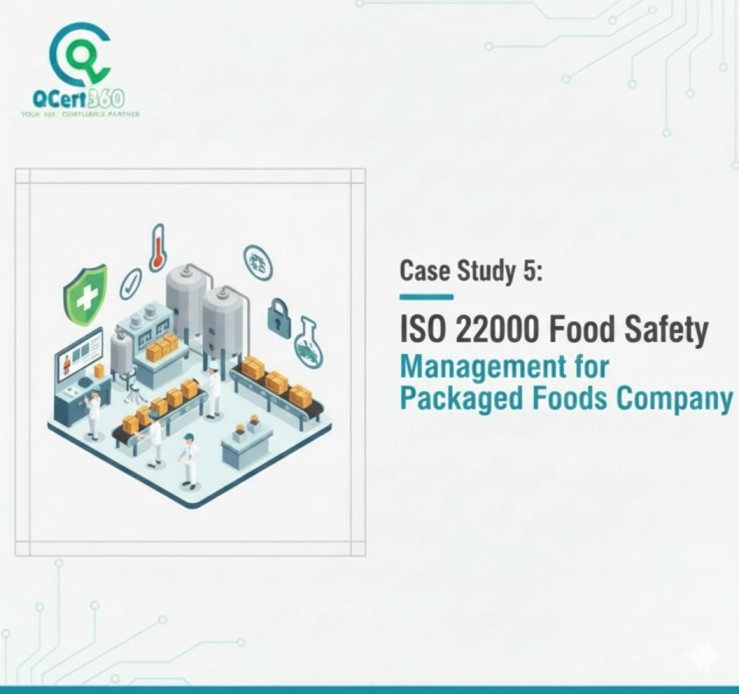
Case Study 5: ISO 22000 Food Safety Management for Packaged Foods Company
Client Overview
FreshBite Foods manufactures packaged snacks, condiments, and ready-to-eat products supplied to retail chains and private-label customers. As demand grew, the company struggled to maintain consistent food safety standards across production lines. Rising customer complaints, variable batch quality, and non-standardized supplier checks began impacting brand reputation and repeat orders.
FreshBite approached Qcert360 to build a robust Food Safety Management System (FSMS) aligned with ISO 22000 and HACCP principles, ensuring consistent, safe, and traceable product output.
Key Challenges faced
Multiple underlying issues were identified during the diagnostic phase, pointing to gaps in hygiene practices, supplier management, and process control.
1. Weak Hygiene Controls
Inconsistent cleaning practices and poor cross-contamination prevention increased the risk of microbiological hazards.
2. No HACCP Studies Conducted
Processes lacked hazard analysis and Critical Control Points (CCPs), leaving food safety risks unmonitored.
3. Non-Standardized Supplier Quality Checks
Vendors supplying raw materials were inconsistent in quality, leading to fluctuating product standards.
4. Inconsistent Batch Quality
The absence of documented work instructions caused variations in production parameters and finished products.
Additional Operational Red Flags
- Rising rejection rates from OEM clients
- Customer complaints increasing by 18% year-on-year
- No internal audit structure
- No CAPA (Corrective and Preventive Action) system
- Production delays due to unclear roles and undocumented processes
Challenge Summary Table
| Area of Concern | Observed Issues | Impact on Business |
|---|---|---|
| Hygiene Practices | Poor sanitation, inconsistent cleaning | Higher contamination risks |
| HACCP Framework | No hazard studies or CCPs | Uncontrolled food safety hazards |
| Supplier Quality | No audits, no scorecards | Variable raw material quality |
| Production Control | No SOPs, unclear roles | Batch inconsistency, delays |
| Customer Feedback | Complaints rising 18% | Loss of trust, rising rejections |
Our Approach
Qcert360 deployed a structured roadmap focused on hazard control, process standardization, and supplier quality enhancement.
1. HACCP Study & Hazard Identification
We conducted a full hazard analysis across FreshBite’s process flow—from receiving raw materials to packaging.
Key activities included:
Developing detailed process flow diagrams
Identifying biological, chemical, and physical hazards
Determining Critical Control Points (CCPs)
Establishing critical limits, monitoring methods, and corrective actions
HACCP Overview Table
| Process Step | Hazard Identified | CCP? | Control Measure |
|---|---|---|---|
| Raw Material Receipt | Microbial contamination | Yes | Supplier checks, temperature control |
| Mixing | Allergen cross-contact | Yes | Allergen segregation |
| Cooking | Pathogen survival | Yes | Time-temperature control |
| Packaging | Foreign matter | No | Visual checks, metal detection |
This systematic approach allowed FreshBite to create a preventive—not reactive—food safety system.
2. FSMS Documentation Development
To support ISO 22000 certification, we built a complete, audit-ready documentation structure, including:
Food safety policy
SOPs for hygiene, cleaning, sanitation, and equipment maintenance
Standard work instructions for each production step
Traceability procedures
Allergen control plans
Environmental monitoring program
This documentation became the backbone of consistency across shifts and batches.
3. Supplier Quality Management
Since raw material variability was a major issue, we introduced:
Supplier audits based on risk level
A supplier approval process with mandatory compliance criteria
Quality scorecards covering hygiene, delivery performance, and test results
Vendor performance monitoring linked to procurement decisions
As a result, low-performing suppliers were either upgraded or replaced.
4. Staff Training & Competency Building
Training sessions were carried out for production teams, quality staff, and supervisors, covering:
Personal hygiene practices
Avoiding cross-contamination
CCP monitoring procedures
Equipment sanitation
Product traceability and recall readiness
Training also reduced human error, especially during high-volume production cycles.
Results
The combined ISO 22000 and HACCP implementation delivered measurable improvements in operational control and product safety.
Food Safety Performance
Zero food safety incidents in 12 months
Strong adherence to hygiene and sanitation protocols
Improved hazard monitoring across CCPs
Operational Improvements
Consistent batch quality with fewer variations
Improved production flow due to documented processes
Faster decision-making through traceability and monitoring systems
Supplier Compliance
Higher-quality raw materials
Strong vendor accountability through scorecards and audits
Certification Outcome
ISO 22000 certification achieved within 100 days
Results Summary Table
| Metric | Before | After Implementation |
|---|---|---|
| Food Safety Incidents | Frequent minor issues | Zero in 12 months |
| Supplier Reliability | Unpredictable | Scorecard-driven consistency |
| Batch Quality Variation | High | Significantly reduced |
| Customer Complaints | Rising 18% YoY | Stabilized and declining |
| Certification Status | Not compliant | ISO 22000 certified |
Interlinked Services Provided
A complete food safety transformation requires an integrated approach.
FreshBite benefited from the following service chain:
ISO 22000 → HACCP → Supplier Quality Audits → Food Safety Training
Each step strengthened the next, creating a well-rounded FSMS capable of supporting long-term growth.
Conclusion
FreshBite’s journey shows how quickly food safety gaps can close when a structured ISO 22000 and HACCP framework is put in place. By tightening hygiene controls, standardizing production steps, and holding suppliers accountable, the company eliminated food safety incidents, stabilized product quality, and restored customer confidence. What once felt like recurring operational headaches—batch inconsistencies, rising complaints, unpredictable suppliers—became measurable, manageable, and fully traceable processes.
The certification wasn’t just an achievement; it became the foundation for smoother production, stronger brand trust, and a safer, more disciplined workforce. For any food manufacturer facing similar challenges, FreshBite’s transformation proves that a well-built FSMS doesn’t add complexity—it removes it.
Ready to Upgrade Your Food Safety System?
How Qcert360 Supports Your Growth
End-to-end ISO 22000 and HACCP implementation
Complete FSMS documentation and audit readiness
Supplier audit programs and scorecard systems
On-site and virtual food safety training
Fast, practical pathways to certification
Take the Next Step Today
Schedule a consultation:
https://calendly.com/qcert360/new-meeting
Email our team:
info@qcert360.com