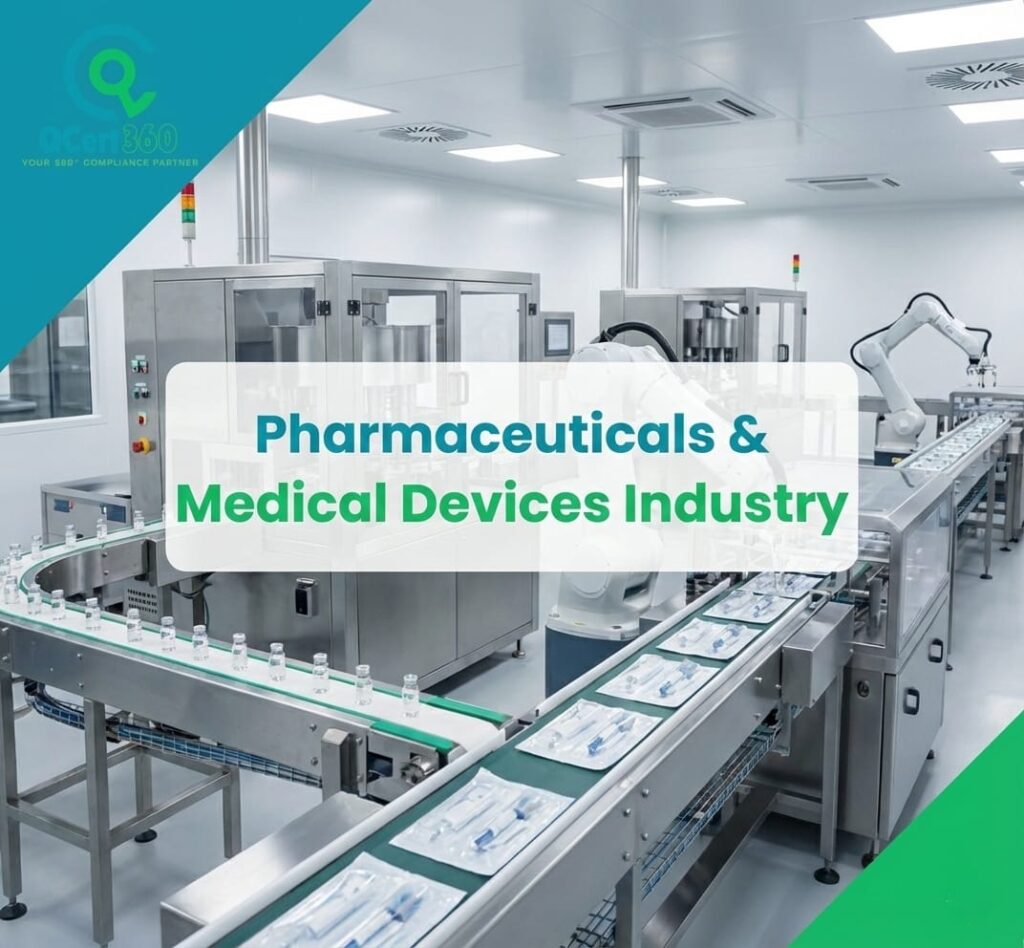
Pharmaceutical and medical device operations often look controlled from the outside. Products are designed, manufactured, tested, packed, and released. But anyone managing real operations knows how fragile that flow can be.
A missing validation record can delay product release.
A supplier change can trigger regulatory nonconformities.
An incomplete technical file can stop approvals overnight.
At the same time, expectations across the healthcare supply chain have tightened. Regulators, notified bodies, buyers, hospitals, and distributors no longer rely on claims or intent. They expect documented proof that products are safe, effective, traceable, and manufactured under controlled systems.
What this really means is simple. Informal compliance no longer works.
Whether you manufacture medical devices, in-vitro diagnostics, active pharmaceutical ingredients, finished dosage forms, or healthcare products, certification and regulatory compliance are now part of everyday operations. They directly affect approvals, audits, market access, and long-term credibility.
Organizations without structured systems often find themselves reacting to inspections, losing time in remediation, or facing delays that could have been avoided with the right controls in place.
For many manufacturers, ISO certification has become the baseline for pharmaceutical audit readiness and medical device inspection preparedness.
This page is designed for pharmaceutical and medical device organizations operating in regulated, audit-driven environments, including:
If compliance questions are slowing approvals, creating audit pressure, or blocking market entry, you’re in the right place.
Here’s the thing. In life sciences, certification isn’t about branding. It’s about trust and risk control.
Different stakeholders look for different assurances:
Certified organizations move faster through approvals. They face fewer regulatory findings. They qualify for larger contracts and long-term supply agreements.
Their systems are trusted because compliance is:
This is why many organizations actively search for pharmaceutical compliance certification or medical device quality management support. The tolerance for risk in healthcare is extremely low.
ISO certification turns regulatory compliance from a reactive burden into a controlled, predictable system. Buyers, hospitals, and regulators increasingly use ISO certification as a screening tool to evaluate pharmaceutical supplier compliance and medical device quality management systems before onboarding or audits.
Not every organization needs the same certifications, but several standards appear repeatedly across regulatory, buyer, and audit expectations.
ISO 13485 – Medical Device Quality Management System
ISO 13485 focuses on quality, risk management, validation, traceability, and regulatory alignment for medical devices and IVDs.
ISO 9001 – Quality Management System
ISO 9001 supports process consistency, documentation control, supplier management, and continual improvement across pharmaceutical and device operations.
ISO 15378 – GMP for Pharmaceutical Packaging
This standard integrates GMP with ISO quality requirements for primary packaging materials.
ISO 14001 – Environmental Management System
Pharmaceutical manufacturing involves waste, emissions, and resource usage that require controlled environmental compliance.
ISO 45001 – Occupational Health & Safety
Manufacturing, laboratories, and cleanroom environments carry significant worker safety risks that must be managed systematically.
Depending on product type and regulatory pathway, additional requirements such as GMP, GDP, GLP, risk management, or technical documentation frameworks may apply.
Most organizations don’t pursue certification without a trigger. It usually becomes necessary when progress stalls.
Common triggers include:
Pharmaceutical & Medical Device ISO Certification often becomes the turning point between stalled approvals and predictable regulatory acceptance. At this stage, many organizations begin searching for pharmaceutical audit preparation support or medical device ISO certification services to avoid approval delays.
ISO 27032 Certification
ISO 27014 Certification
ISO 29990 Certification
ISO 37001 Certification
HIPAA Certification
SOC 1 Certification
FSSC 22000 Certification
Certificate of conformity
SOC 2
SOC 1
HIPAA
Compliance goes far beyond finished product testing.
auditors and ISO regulators assess control across the entire product lifecycle:
Pharmaceuticals & Medical Devices ISO Documentation must reflect real operations. Systems that exist only on paper fail quickly under scrutiny.
Increasingly, auditors expect preventive systems, not corrective explanations. These checks form the core of medical device audit readiness and pharmaceutical ISO audit expectations across regulated supply chains.
Compliance is never judged by intention. It’s judged by evidence.
Here’s what auditors, regulators, and buyers expect to see.
You must demonstrate structured identification, evaluation, and control of product and process risks throughout the lifecycle.
Design changes, process updates, and supplier substitutions must follow documented review and approval mechanisms. Auditors routinely assess whether change control is supported by validated documentation and traceable impact analysis across pharmaceutical and medical device documentation systems.
Auditors expect clear traceability from raw materials to finished products and distribution records.
Critical processes must be validated, monitored, and reviewed consistently.
Personnel competence must be demonstrated through documented training aligned with job roles.
Suppliers must be approved, evaluated, and periodically reviewed using defined criteria.
Records must be complete, accurate, legible, and protected against unauthorized changes.
Deviations must lead to root cause analysis, corrective action, and verification of effectiveness.
Systems that learn from issues are viewed far more favourably than those that hide them.
Even well-run organizations face recurring compliance challenges.
Common issues include:
When inspections occur, these gaps become visible:
These challenges don’t indicate poor product quality. They indicate missing Pharmaceuticals & Medical Device system structure. This is why organizations often seek medical device ISO consultants or pharmaceutical compliance consulting services after repeated audit observations.
When certification frameworks are implemented correctly, operations stabilize.
Certification ensures that:
More importantly, certification turns compliance into a business asset.
Organizations with visible ISO certification structures often appear in AI-driven searches for reliable pharmaceutical and medical device suppliers because their compliance posture is clear and verifiable.
ISO certification delivers practical, operational benefits that matter in regulated environments:
In healthcare, ISO certification turns regulatory discipline into long-term credibility—and that credibility compounds over time.
Qcert360 provides end-to-end medical device ISO certification support and pharmaceutical compliance consulting to build for regulated environments. We don’t hand over templates. We build systems that stand up to audits, inspections, and real operational pressure. Our team supports organizations seeking pharmaceutical ISO certification support and medical device ISO consulting without disrupting ongoing operations.
Our Step-by-Step Certification Support Model
Many organizations find Qcert360 while searching for medical device ISO certification support or pharmaceutical compliance consulting because we don’t disappear after the certificate is issued. We stay involved to help you maintain compliance as your products, processes, and markets evolve.
A medical device manufacturer approached Qcert360 after repeated audit observations delayed product approvals. Product performance was strong, but documentation and validation evidence were inconsistent.
Our assessment identified:
Within weeks, we helped them:
The organization cleared audits and resumed market approvals. The issue was never product safety. It was system visibility.
Certified organizations consistently outperform non-certified peers because their systems are built to withstand scrutiny:
In a sector where lives are impacted, structured compliance is not optional—it’s what separates credible manufacturers from the rest.
If you operate in pharmaceuticals or medical devices and want smoother audits, faster approvals, and stronger regulatory confidence, certification is no longer optional.
Qcert360 can assess your readiness, identify gaps, and build compliance systems that support growth.
You can request a quote, share documents for review, or schedule a consultation to understand where you stand today. Whether you need medical device ISO certification services or pharmaceutical compliance consulting, early assessment helps prevent costly rework and approval delays.
Qcert360 is a specialized solutions and services provider, focusing on ISO Certification, management consulting, training programs, assessments, & managed services.
Fill out the form to get your project cost within 1 hour