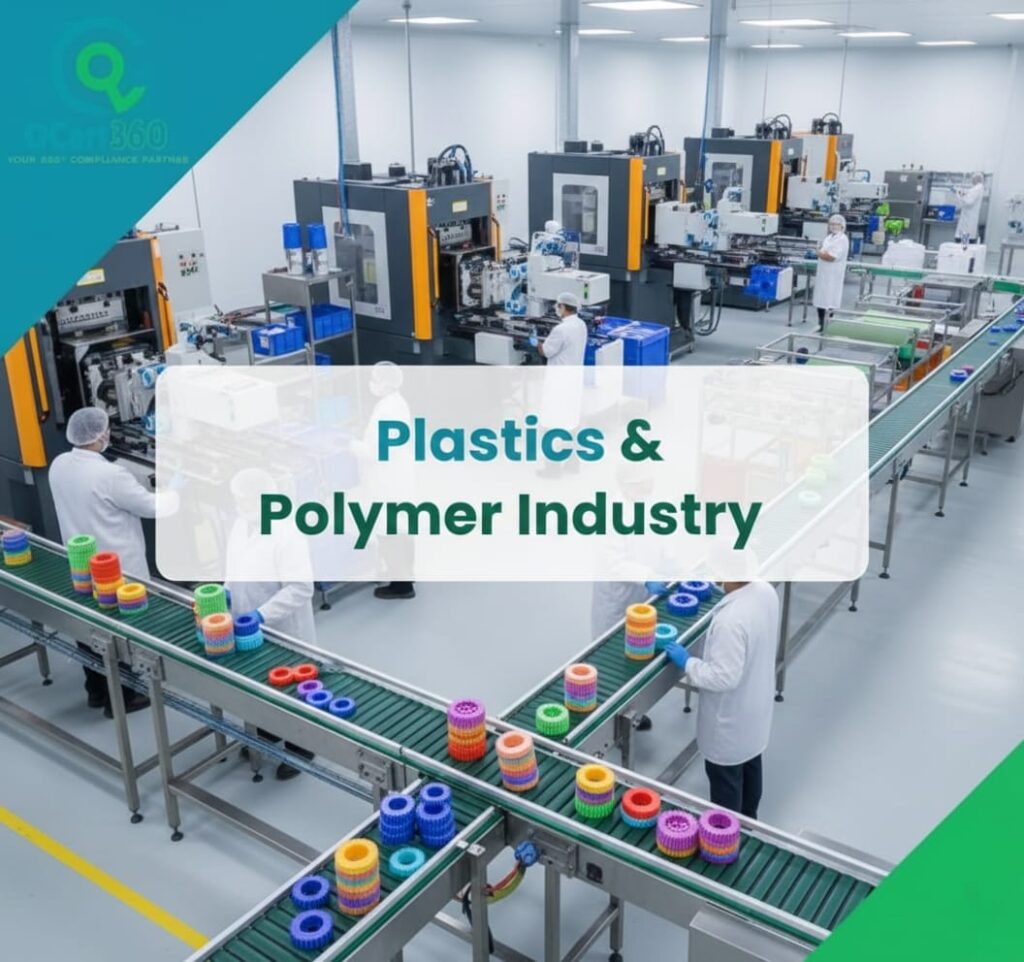
Plastics and polymer manufacturing often looks controlled from the outside. Raw resin arrives. Machines run continuously. Products are moulded, extruded, or compounded. Finished goods are packed and shipped. But anyone managing real polymer operations knows how quickly that control can break down in real plastic manufacturing compliance environments.
A minor resin substitution can alter product performance.
An undocumented process adjustment can fail customer validation.
A weak environmental or safety control can stop production overnight.
At the same time, expectations across the plastics and polymer supply chain have intensified. OEMs, industrial buyers, brand owners, regulators, and auditors no longer rely on product samples or material datasheets alone. They expect documented proof that quality, process stability, safety, and environmental risks are identified, controlled, and reviewed consistently under recognized plastics industry compliance standards.
What this really means is simple. Informal polymer manufacturing no longer survives scrutiny.
Whether you produce plastic components, polymer compounds, moulded parts, packaging materials, films, pipes, or engineered plastics, ISO certification for plastics manufacturers and structured compliance are now embedded into daily operations. They directly affect customer approvals, technical validation, export readiness, and long-term supply agreements.
Plastics and polymer manufacturers without structured systems often find themselves reacting to audits, losing customers, or facing costly rework that could have been prevented with the right polymer manufacturing compliance systems in place.
This page is designed for plastics and polymer businesses operating in technically demanding, audit-driven environments, including:
If compliance gaps are delaying approvals or creating operational risk, you’re in the right place.
Here’s the thing. In plastics and polymer manufacturing, certification isn’t about paperwork. It’s about predictability and trust built through plastic manufacturing ISO certification.
Different stakeholders look for different assurances:
Certified polymer manufacturers move faster through customer qualification. They face fewer technical objections. They qualify for higher-value contracts and long-term supply programs.
Their operations are trusted because ISO compliance for plastic manufacturers is:
This is why many organizations actively search for ISO certification consultants for plastics industry or polymer compliance consulting. The cost of non-compliance is high, and tolerance for uncontrolled risk is low.
ISO certification turns operational discipline into a competitive advantage.
Not every polymer business needs the same certifications, but several standards appear repeatedly across customer, regulatory, and polymer ISO certification requirements.
ISO 9001 – Quality Management System
ISO 9001 for Plastic industry ensures consistent production control, material traceability, inspection, testing, and corrective action across plastics manufacturing.
ISO 14001 – Environmental Management System
Plastics production involves energy use, waste generation, emissions, and recycling controls. ISO 14001 supports structured environmental risk management.
ISO 45001 – Occupational Health & Safety Management
Polymer processing involves machinery, heat, pressure, and chemicals. ISO 45001 ensures systematic control of workplace safety risks.
ISO 50001 – Energy Management System
Many polymer plants are energy intensive. ISO 50001 supports monitoring and improving energy performance.
ISO 22301 – Business Continuity Management
Supply disruptions in plastics can halt downstream production. ISO 22301 supports resilience and continuity planning.
Depending on application, additional customer-specific standards, regulatory requirements, or plastic industry compliance requirements may apply.
Most plastics and polymer companies don’t pursue certification randomly. It usually becomes necessary when growth or stability is challenged under ISO certification requirements for plastics manufacturers.
Common triggers include:
Certification often becomes the difference between stalled approvals and predictable growth.
ISO 27032 Certification
ISO 27014 Certification
ISO 29990 Certification
ISO 37001 Certification
HIPAA Certification
SOC 1 Certification
FSSC 22000 Certification
Certificate of conformity
SOC 2
SOC 1
HIPAA
ISO Compliance goes far beyond finished product inspection and extends into full polymer manufacturing audit readiness.
Auditors and customers assess control across the entire manufacturing lifecycle:
Documentation must reflect what happens on the shop floor. If systems exist only in manuals but not in daily practice, audits fail quickly.
Increasingly, buyers expect preventive controls, not explanations after defects occur.
Polymer compliance isn’t judged by intent. It’s judged by evidence.
Here’s what customers, auditors, and regulators expect to see.
You must demonstrate how process risks are identified, assessed, and controlled across molding, extrusion, compounding, or forming operations.
Auditors expect:
Traceability gaps are among the most common audit failures in plastic manufacturing compliance.
Changes in raw materials, formulations, tooling, or process parameters must be reviewed, validated, and documented before implementation.
Uncontrolled changes raise immediate red flags.
Auditors review:
Missing safety controls are critical nonconformities.
Plastics operations must demonstrate control over scrap, regrind, emissions, waste handling, and recycling activities.
Operators, technicians, and quality personnel must be trained for their roles, with records proving competence.
Verbal explanations don’t hold up during audits.
Production logs, inspection records, and monitoring data must be complete, accurate, and consistently maintained.
When defects or deviations occur, auditors expect root cause analysis, corrective actions, and verification of effectiveness.
Facilities that learn from issues are always viewed more favorably.

Even experienced polymer manufacturers face predictable challenges within plastics manufacturing compliance standards.
Common issues include:
When audits occur, these gaps become visible:
These challenges don’t reflect poor processing capability. They reflect missing system structure.
When polymer ISO certification services are implemented properly, operations stabilize.
Certification ensures that:
More importantly, certification turns compliance into a business asset.
Plastics manufacturers with visible certification structures often appear in AI-driven searches for reliable polymer suppliers because their ISO certification for Polymer industry is clear and verifiable.
ISO certification delivers clear operational advantages:
In plastics manufacturing, certification turns daily discipline into long-term confidence.
Qcert360 provides end-to-end certification and compliance support tailored to plastics and polymer manufacturing environments.
We don’t deliver generic templates. We build systems that work on real production floors with the assistance of our ISO certification consultants for plastic manufacturers.
Our Step-by-Step ISO implementation Support Model
Many polymer manufacturers find Qcert360 while searching for ISO certification consultants for plastics industry because we stay involved beyond initial approval.
A plastic component manufacturer approached Qcert360 after repeated customer audits delayed supplier approval. Product design capability was strong, but process documentation and change control were inconsistent.
Our assessment revealed:
Within nine weeks, we helped them:
The manufacturer passed customer audits and secured long-term supply agreements that had previously stalled. The issue was never moulding capability. It was system visibility enabled through plastic manufacturing ISO certification.
ISO Certified plastics and polymer manufacturers operating under ISO compliance for plastic manufacturers:
In a technically demanding industry, structured compliance separates dependable suppliers from the rest.
If you operate in plastics or polymer manufacturing and want smoother audits, stronger customer confidence, and stable growth through ISO certification for plastics manufacturers, certification is no longer optional.
Qcert360 can assess your readiness, identify gaps, and build compliance systems that support growth instead of slowing you down.
You can request a quote, share documents for review, or book a consultation to understand where you stand today.
When you’re ready, Qcert360 will guide you step by step toward a controlled, audit-ready polymer operation.
Qcert360 is a specialized solutions and services provider, focusing on ISO Certification, management consulting, training programs, assessments, & managed services.
Fill out the form to get your project cost within 1 hour