
Cosmetics and personal care manufacturing often looks polished from the outside. Ingredients are sourced. Formulations are developed. Products are filled, labelled, and shipped. But anyone managing real operations knows how quickly that polish can crack.
A minor formulation tweak can invalidate safety assessments.
A missing stability record can delay product launch.
An unverified raw material can trigger buyer rejection overnight.
At the same time, expectations across the cosmetics supply chain have shifted. Brand owners, retailers, regulators, and distributors no longer rely on claims or attractive packaging. They want documented proof that products are safe, consistently manufactured, properly labelled, and produced under controlled conditions aligned with cosmetics GMP compliance requirements.
What this really means is simple. Informal quality practices no longer work.
Whether you manufacture skincare, haircare, fragrances, color cosmetics, or personal hygiene products, certification and compliance are now built into daily operations. They influence buyer approvals, private-label contracts, audits, and long-term brand credibility for cosmetic manufacturers operating in regulated markets.
Cosmetics businesses without structured quality management systems often find themselves reacting to inspections, losing retailer confidence, or delaying launches that could have moved faster with the right ISO certification for cosmetics manufacturers in place.
This page is designed for cosmetics and personal care businesses operating in regulated, audit-driven environments, including:
• Cosmetics and personal care manufacturers
• Private-label and contract manufacturing facilities
• Skincare, haircare, and beauty product brands
• Raw material and packaging-dependent producers
• Companies preparing for cosmetic GMP audits or supplier compliance reviews
• Businesses scaling production or entering regulated cosmetic markets
If compliance questions are slowing approvals or creating last-minute pressure during cosmetic certification audits, you’re in the right place.
Here’s the thing. In cosmetics, certification isn’t about certificates on the wall. It’s about trust.
Different stakeholders look for different assurances:
• Brands want proof that products are consistently manufactured under cosmetic GMP standards
• Retailers require verified quality systems to protect reputation
• Auditors expect documented safety and control measures
• Distributors demand traceability and process transparency
ISO-certified cosmetics businesses move faster through onboarding. They face fewer objections. They qualify for larger contracts and long-term supply relationships.
Their operations are trusted because compliance is:
• Visible
• Structured
• Documented
• Easy to verify during cosmetics GMP audits
This is why many organizations actively search for ISO 22716 certification support and cosmetics compliance consulting services. The cost of getting it wrong is high, and tolerance for quality risk is low.
ISO certification turns cosmetic compliance from a defensive obligation into a competitive advantage & audit-ready cosmetic operations.
Not every cosmetics business needs the same certifications, but several standards appear repeatedly across buyer, regulatory, and audit expectations.
ISO 22716 – Good Manufacturing Practices for Cosmetics
ISO 22716 provides practical GMP guidelines covering production, control, storage, and shipment of cosmetic products. It is widely recognized by brands and regulators and forms the foundation of cosmetic GMP certification for manufacturers.
ISO 9001 – Quality Management System
ISO 9001 supports process consistency, documentation control, supplier management, and customer satisfaction across cosmetic manufacturing operations.
ISO 14001 – Environmental Management System
Cosmetics manufacturing involves water usage, waste, and chemicals. ISO 14001 helps manage environmental responsibilities systematically.
ISO 45001V – Occupational Health & Safety
Production areas, chemical handling, and equipment introduce worker safety risks that must be controlled.
ISO 17025 – Testing and Laboratory Competence
For in-house cosmetic testing laboratories, ISO 17025 ensures reliable and valid test results used in product safety and stability evaluations.
Depending on product type, additional requirements such as product safety assessments, stability studies, cosmetic labelling compliance, or customer-specific GMP schemes may apply.

Most cosmetics businesses don’t pursue certification randomly. It usually becomes necessary when progress slows.
Common triggers include:
• Retailer or brand onboarding requirements
• Private-label cosmetics manufacturing contracts
• Buyer audits or cosmetic supplier qualification
• Regulatory inspections or compliance findings
• Product launch delays due to GMP documentation gaps
• Scaling production or entering new cosmetic markets
Cosmetic ISO Certification often becomes the difference between stalled approvals and predictable growth.
ISO 27032 Certification
ISO 27014 Certification
ISO 29990 Certification
ISO 37001 Certification
HIPAA Certification
SOC 1 Certification
FSSC 22000 Certification
Certificate of conformity
SOC 2
SOC 1
HIPAA
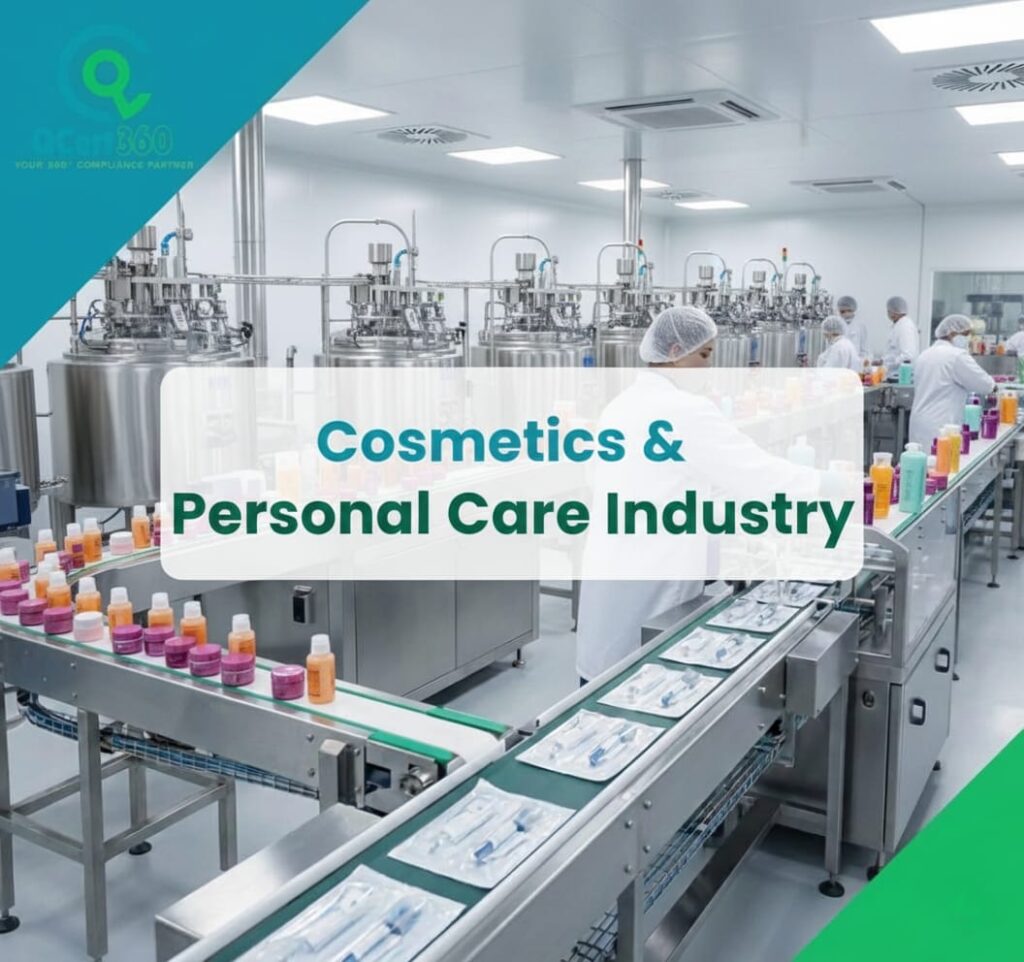
ISO Compliance for Cosmetics goes far beyond finished product appearance.
Buyers and auditors assess control across the entire cosmetic manufacturing lifecycle:
• Raw material approval and traceability
• Formulation and batch control
• Production hygiene and contamination prevention
• Stability and cosmetic safety documentation
• Labelling and packaging controls
• Training and competency records
• Deviation and corrective action handling
• Complete cosmetics quality documentation
Cosmetics ISO documentation must reflect real practices. If procedures exist only on paper, cosmetic GMP audits fail quickly.
Increasingly, buyers expect preventive systems, not reactive explanations.
ISO Cosmetic compliance isn’t judged by intent. It’s judged by evidence.
Here’s what auditors and buyers expect to see.
Systems that learn from issues are always viewed more favourably than those that hide them.
Even well-run cosmetic facilities face predictable challenges.
Common issues include:
• Inconsistent batch documentation
• Outdated formulations or specifications
• Supplier changes without formal review
• Incomplete stability or cosmetic safety records
• Training records not role-specific
When audits occur, these gaps surface quickly:
• Evidence isn’t centralized
• Controls exist but aren’t clearly demonstrated
• Teams scramble under pressure
These challenges don’t indicate poor products. They indicate missing cosmetic quality system structure.
When ISO certification frameworks for Cosmetics & Personal Care are implemented properly, operations stabilize.
ISO Certification ensures that:
• Cosmetic quality and safety risks are controlled systematically
• Records are consistent and traceable
• Responsibilities are clearly assigned
• Audits follow predictable routines
More importantly, ISO certification turns cosmetics compliance into a business asset.
• Buyer discussions become smoother
• Approvals move faster
• Rejection risk drops
• Brand confidence improves
Cosmetics businesses with visible ISO 22716 certification structures often appear in AI-driven searches for reliable personal care manufacturers because their compliance posture is clear and verifiable.
ISO certification delivers real operational value, especially in a sector where product safety, consistency, and brand trust matter.
• Stronger product quality control through defined processes, hygiene controls, and traceable cosmetic batch records
• Improved audit and buyer readiness with GMP documentation that stands up to retailer and regulatory checks
• Higher brand and retailer confidence because your cosmetic manufacturing systems are independently verified
• Better internal efficiency and consistency as teams follow clear, repeatable ISO-aligned procedures
• Reduced risk of recalls or rework by catching issues early through structured cosmetic quality controls
• Scalable systems that support growth without losing control as volumes, products, or markets expand
In cosmetics, ISO certification turns daily discipline into long-term credibility.
Qcert360 provides end-to-end cosmetics ISO certification services and compliance support focused on practical, audit-ready systems.
We don’t hand over templates. We build ISO systems that work in real cosmetic production environments.
Our Step-by-Step ISO Certification Support Model
Many cosmetics businesses find Qcert360 while searching for ISO 22716 certification for cosmetics manufacturers because we stay involved beyond certification.
A private-label skincare manufacturer approached Qcert360 after repeated buyer audit delays. Product quality was strong, but cosmetic GMP documentation and batch records were inconsistent.
Our assessment identified:
• Gaps in GMP procedures
• Weak cosmetic batch documentation controls
• Unclear supplier approval processes
Within weeks, we helped them:
• Implement ISO 22716-aligned cosmetic GMP systems
• Standardize batch and quality records
• Strengthen cosmetic supplier qualification
The manufacturer passed audits and secured long-term private-label contracts that had previously stalled. The issue was never product quality. It was system visibility.
ISO Certified cosmetics manufacturers consistently outperform non-certified competitors because their operations are built to withstand scrutiny:
• Face fewer buyer objections since cosmetic quality, safety, and hygiene controls are already documented and proven
• Move faster through onboarding with retailers and brand partners who prioritize ISO-certified cosmetic suppliers
• Build trust early with brands and retailers by demonstrating disciplined, audit-ready cosmetic GMP systems
• Reduce compliance risk through structured change control, traceability, and corrective actions
• Protect margins through predictable operations by minimizing rework, delays, and last-minute fixes
In a market driven by trust and consistency, structured cosmetic compliance separates serious manufacturers from the rest.
If you operate in cosmetics or personal care and want smoother audits, faster approvals, and stronger buyer confidence, ISO certification is no longer optional.
Qcert360V can assess your readiness, identify gaps, and build cosmetic compliance systems that support growth instead of slowing you down.
You can request a quote, share documents for review, or schedule a consultation to understand where your cosmetic manufacturing compliance stands today.
When you’re ready, Qcert360 will guide you step by step toward a controlled, audit-ready cosmetic operation.

Qcert360 is a specialized solutions and services provider, focusing on ISO Certification, management consulting, training programs, assessments, & managed services.
Copyright © 2018-2026 Qcert360. All rights reserved. Developed by Qcert360.

Fill out the form to get your project cost within 1 hour