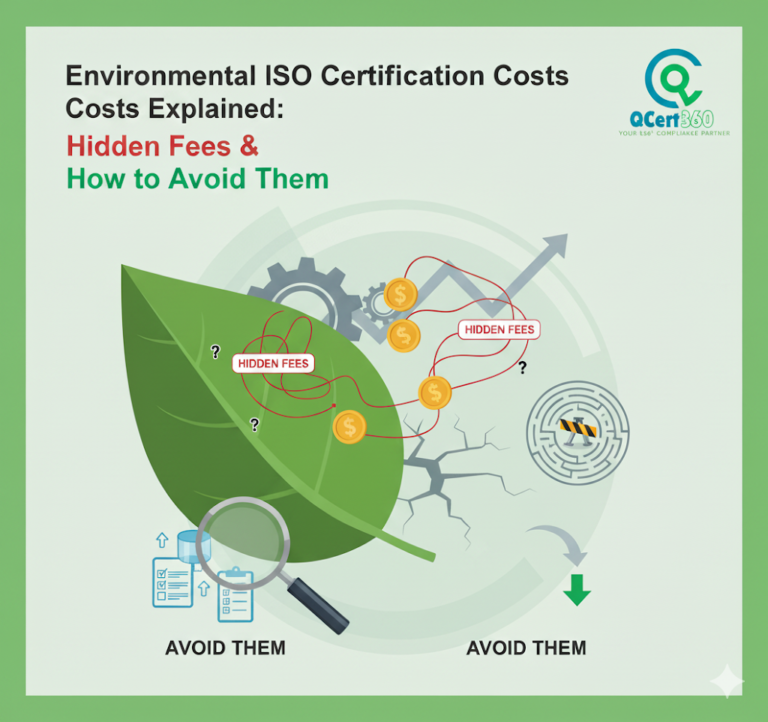
When organizations first look at environmental ISO certification, the conversation usually starts with the visible cost — certification audits, consultant fees, or registrar charges. But here’s the catch: what most companies don’t realize is that these figures often cover only the surface. Beneath, there are hidden costs that can inflate the budget if not managed smartly. Understanding these financial layers is critical, especially for SMEs and organizations balancing sustainability goals with financial discipline.
This guide takes you through the true costs of environmental ISO certification, reveals where the hidden fees lurk, and shows how to avoid them without compromising quality. We’ll also draw on real-world examples and practical lessons to help you plan with clarity.
Why Environmental ISO Certifications Matter
Environmental ISO certifications like ISO 14001 certification cost analysis or ISO 50001 implementation expenses are not just about compliance. They directly influence how your organization is perceived by regulators, clients, and increasingly eco-conscious investors. Certification demonstrates commitment to environmental responsibility, resource efficiency, and legal compliance.
But while the benefits are undeniable, financial clarity is what determines whether these certifications become an investment or a liability.
The Direct Costs Everyone Expects
Let’s start with the predictable outflows:
- Audit and certification fees: Payments to accredited bodies for audits and issuing the certificate.
- Training staff: Equipping employees with knowledge of the chosen standard.
- Consultancy (optional): External experts guiding implementation.
- Document preparation: Manuals, records, and procedures aligned with ISO requirements.
These are the costs usually highlighted in brochures. But what organizations overlook is the ripple effect of operational, administrative, and regulatory factors that add up silently.
Where the Hidden Fees Come From
- Internal Time and Resource Drain
One overlooked expense is the hidden environmental ISO audit cost of your staff’s time. Preparing for audits means allocating significant hours to documentation, training, and corrective actions. For smaller teams, this translates into delayed projects and opportunity loss.
- Surveillance Audits and Annual Reviews
Certification doesn’t end after the initial audit. Most standards require annual or semi-annual surveillance audits. These can quietly double your ISO 14001 ongoing expenses over three years.
- Technology and Infrastructure Updates
Sometimes, the audit uncovers gaps in waste management, energy tracking, or compliance monitoring. Upgrading tools or systems to close these gaps brings additional ISO compliance upgrade costs.
- Regulatory Alignment
If your organization operates in multiple jurisdictions, ensuring that certification aligns with local environmental laws can involve ISO registration hidden charges for extra-legal consultancy or audits.
Case Study: Manufacturer Caught Off Guard by Certification Budget
A mid-sized packaging company underestimated its environmental certification costs. While the initial ISO certification budget planning allocated funds for consultants and audit fees, the company failed to consider energy monitoring equipment upgrades required during implementation. The result: their total spends rose by nearly 40% beyond projections.
The lesson? Certification costs must include room for operational improvements, not just paperwork.
The Ripple Effect of Poor Planning
Poor foresight can have a multiplying effect. For instance:
- Overestimating your team’s internal bandwidth can lead to delays and higher ISO audit preparation costs.
- Cutting corners on training can trigger ISO non-compliance penalties later when auditors identify gaps.
- Not budgeting for surveillance audits makes future renewals financially painful.
How to Avoid Hidden ISO 14001 Certification Costs
Step 1: Conduct a Gap Analysis
A structured environmental management system cost breakdown begins with a gap analysis. This helps identify compliance weaknesses before auditors do, reducing surprises.
Step 2: Bundle Certifications
If your organization seeks multiple standards (like ISO 14001 and ISO 45001), certification bodies often offer bundled pricing. This minimizes separate audit fees and reduces overall ISO certification financial impact.
Step 3: Invest in Internal Training
Instead of over-relying on external consultants, train an internal team to handle recurring compliance. This saves heavily on long-term consultancy fees.
Step 4: Negotiate Transparency
Always ask registrars for a clear breakdown of certification, surveillance, and renewal charges to avoid ISO environmental compliance hidden fees.
Beyond the Obvious Costs
Here’s where most companies miss opportunities to control costs:
Data and Reporting Systems
Auditors now expect digitized records, especially under ISO 14001 and ISO 50001. Implementing environmental reporting software upfront avoids sudden ISO implementation overheads.
Change Management
Certification often pushes cultural shifts. Resistance from staff can result in extended timelines and unplanned training sessions. Factoring in these soft costs early prevents unnecessary ISO program overruns.
Supply Chain Audits
For industries like automotive and chemicals, auditors may request supplier evaluations. These assessments come under ISO environmental system external costs, often overlooked until midway.
Real-World Cost Management Strategies
- Retail case: A European retailer cut its ISO environmental certification expenses by 20% by digitizing waste-tracking forms, reducing the need for manual record-keeping.
- Energy sector example: An energy services provider negotiated with a certification body to merge their surveillance audits with client site audits, trimming travel-related fees significantly.
Long-Term Financial Benefits Often Overlooked
While we’ve been dissecting costs, it’s worth noting the hidden savings ISO certification provides:
- Energy savings through ISO 50001’s efficiency measures.
- Reduced fines from ISO non-compliance penalties.
- Better tender eligibility, leading to new revenue opportunities.
The ROI isn’t always immediate but adds up in reduced waste, energy efficiency, and reputational gains.
The Risk of Choosing the Cheapest ISO 14001 Certification option
Some companies fall into the trap of going with the lowest upfront cost when planning for environmental ISO certification. On the surface, it seems like a budget-friendly move, but here’s why that approach often backfires:
- Cut-rate consultants may leave critical gaps in your system, which later trigger expensive corrective actions during the audit stage. What looked like a small saving upfront can snowball into higher costs once issues are flagged.
- Cheap registrars may lack the necessary credibility or international recognition, which can lead to rejection in tenders or supply chain approvals — making the entire investment worthless from a business growth perspective.
- Short-term savings might actually mean higher ISO 14001 recertification costs during renewals, as initial gaps resurface and demand additional time, resources, and even re-audits.
The takeaway: going cheap with certification is rarely sustainable. A trusted certification path saves money long-term and protects your business reputation.
Building a Sustainable Cost Roadmap
Instead of treating certification as a one-time project, it should be viewed as a recurring cycle of improvement. A well-structured financial roadmap ensures that there are no surprises and that costs are spread predictably over time. Key elements to include are:
- Initial setup costs, such as consultant guidance, training programs, and internal system development.
- Yearly surveillance fees, which must be factored in as part of ongoing compliance rather than ad-hoc expenses.
- Staff training refreshers to keep knowledge updated, especially as standards evolve or regulations tighten.
- Potential system upgrades, like environmental monitoring tools or digital reporting platforms, which often become necessary as organizations grow.
This holistic approach ensures your environmental ISO budget forecasting is not only accurate but also aligned with future sustainability and operational goals, preventing financial shocks down the line.
Digital Tools as Cost Shields
Investing in digital tools like compliance dashboards, automated document control, and cloud-based monitoring systems might feel like a significant upfront expense, but the long-term benefits are undeniable. These tools act as cost shields by:
- Reducing human error and missed deadlines that often lead to repeat audits or non-conformities.
- Streamlining documentation, which directly cuts recurring ISO documentation hidden costs and makes data retrieval almost instant.
- Providing structured, traceable systems that impress auditors and minimize the risk of failing surveillance audits.
In practice, digital adoption doesn’t just reduce costs; it future-proofs your compliance system. Organizations that embrace these tools often find that their certification process becomes smoother, faster, and far more reliable than those still relying on outdated manual methods
FAQs on Environmental ISO Certification Costs
1. What is the average cost of ISO 14001 certification?
It depends on the size and complexity of operations, but costs typically include audits, training, and documentation. Contact Qcert360 for more details
2. Are surveillance audits more expensive than initial audits?
They’re usually smaller but recurring, making them significant over a three-year cycle.
3. Can hidden costs be completely avoided?
Not entirely, but proactive planning reduces them substantially.
4. Do SMEs face higher proportional costs?
Yes, because internal resource strain is heavier for smaller teams.
5. Are ISO 14001 consultant fees necessary?
Not always. Well-trained internal teams can reduce reliance on external consultants.
6. Do operational upgrades always count as hidden costs?
Yes, especially if they’re discovered mid-certification. Planning them early avoids surprises.
7. How do hidden costs affect ROI?
They delay breakeven, but smart cost control ensures ROI remains positive.
8. Can organizations pass these costs to clients?
Indirectly, yes. Improved efficiency and compliance often justify higher service prices.
9. What role do digital tools play in cost control?
They reduce human error, speed up documentation, and prevent repeat audit failures.
10. How often should budgets for environmental ISO be reviewed?
Annually, to reflect surveillance audits, regulatory changes, and system updates.
Our Services
ISO Standards
- ISO 9001 Certification
- ISO 14001 Certification
- ISO 45001 Certification
- ISO 22000 Certification
- ISO 17025 Certification
- ISO 27001 Certification
- ISO 13485 Certification
- ISO 20000-1 Certification
- ISO 41001 Certification
- ISO 22716 Certification
- ISO 50001 Certification
- ISO 22301 Certification
- ISO 29993 Certification
Product Certifications
Other international standards
- FSSC 22000 Certification
- HIPAA
- HACCP Certification
- SA 8000 Certification
- GMP Certification
- GDPR
- GDP Certification
- GLP Certification
- Certificate of Conformity
QCert360 provides a wide range of services including ISO certification, audit support, compliance consulting, and training. They specialize in helping businesses achieve global standards and certifications like ISO 9001, ISO 27001, ISO 14001, and many others. Their team ensures a seamless experience from consultation to certification, supporting clients at every stage.
The time it takes to achieve certification can vary depending on the complexity of the standard and the readiness of your organization. On average, it takes about 3 to 6 months. QCert360 works closely with clients to streamline the process, ensuring that all requirements are met efficiently and within a reasonable timeline.
QCert360 is a trusted partner with years of experience in helping businesses obtain international certifications. Their expert consultants provide tailored solutions, ensuring your organization not only meets but exceeds industry standards. With a customer-centric approach, they focus on offering end-to-end support to simplify the certification journey.
QCert360 serves a wide range of industries including manufacturing, healthcare, information technology, education, and services, among others. They customize their certification solutions to meet the unique requirements of each industry, ensuring relevance and compliance with global standards.
Yes, QCert360 provides ongoing support even after certification. They offer services like surveillance audits, recertification guidance, and consultancy to help maintain and improve your certification status. Their team ensures that your organization stays compliant and up-to-date with any changes in certification standards.
Getting started with QCert360 is simple. You can contact them via their website to request a consultation. Their team will assess your needs, discuss the best certification options for your business, and outline the steps involved. From there, they’ll guide you through the entire process, ensuring you’re prepared for certification.
QCert360 stands out due to its customer-focused approach, industry expertise, and comprehensive service offerings. Their team doesn’t just help you obtain certification but works to ensure your organization thrives in compliance with international standards. They also offer personalized consultation, making the process smoother and more efficient, ensuring long-term success for your business.
The cost of certification varies depending on factors such as the type of certification, the size and complexity of your organization, and the specific industry requirements. QCert360 offers competitive pricing and provides tailored quotes based on your unique needs. They ensure transparency and work with you to find the most cost-effective solution for your certification goals.
Yes, QCert360 offers internal audit services to help assess and improve your organization’s processes. Their expert auditors conduct thorough reviews of your systems and operations to ensure they meet required standards. They also provide actionable recommendations to help enhance efficiency and compliance, making sure you’re fully prepared for external audits.
If your organization doesn’t pass an audit or certification assessment, QCert360 works with you to understand the reasons for non-compliance and provides support to rectify the issues. They offer guidance on corrective actions and help you prepare for a re-assessment. Their goal is to ensure your organization meets the necessary standards for certification, and they will be by your side to make the process as smooth as possible.