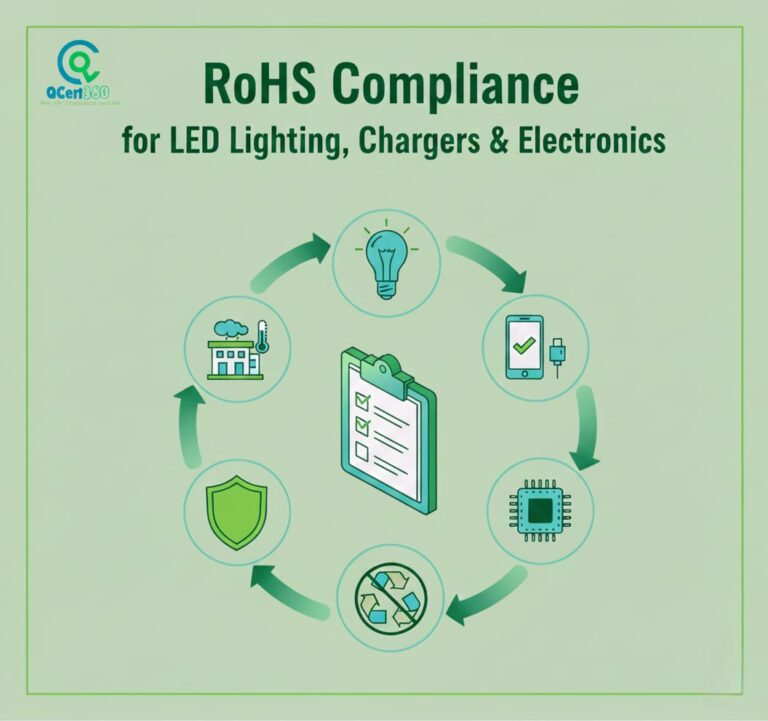
If you build or sell electronic products, there’s one thing you can’t afford to get wrong: hazardous-substance compliance. Here’s the thing—RoHS isn’t just another checkbox in your product development cycle. It’s a gatekeeper. Without it, your LED lighting systems, chargers, adapters, circuit boards, and any electronic component that hits the market can be rejected before they even reach your buyers.
And with stricter RoHS screening by distributors, online marketplaces, and importers, the pressure to get your compliance workflow right has never been higher. Let’s break down what actually matters, what drives your RoHS approval timeline, and how to keep your products safe from non-compliance risks.
Why RoHS Compliance Has Become a Non-Negotiable Standard
A lot of manufacturers treat RoHS like paperwork. In reality, it’s your core product-safety guarantee. When a buyer checks your test reports, they’re essentially asking one thing:
Can they trust your product to be free from restricted substances like lead, cadmium, mercury, PBB, PBDE, and other harmful materials?
This is where keywords like hazard-free electronics compliance, substance-restriction testing, and RoHS conformity verification come into play. Buyers search for these terms because they want assurance—not excuses.
If your documentation is incomplete or your lab data doesn’t match the product bill of materials, your shipment can get blocked instantly. No brand wants that.
What Triggers a RoHS Failure in LED Lighting and Chargers
Let’s talk about the categories most prone to RoHS issues:
- Soldering Materials in LED Drivers
Lead solder remains the biggest offender. Many LED manufacturers assume their supplier uses compliant solder, only to discover later that internal joints exceed the allowable limit. This is where lead-safe production controls matter.
- Plastic Casings in Chargers
Plastic shells can contain flame retardants that breach RoHS limits. Without restricted-materials screening, you’re relying on supplier declarations, which often miss the mark.
- PCB Components
Printed circuit boards are a RoHS hotspot. Capacitors, connectors, and resistors sourced from low-visibility vendors often slip through compliance checks.
- Cable Insulation Issues
Charger cables and LED strips sometimes fail due to phthalates. You need RoHS-P2 lab testing to catch these early.
A Real-World Case Study: How One LED Brand Avoided a Costly Recall
A mid-size LED lighting brand reached out to Qcert360 after their shipment was flagged for non-compliant solder joints. The distributor issued a warning: fix the issue or face product delisting.
The company had relied entirely on supplier declarations—no independent testing, no documentation structure, no compliance-risk mapping.
Here’s how Qcert360 turned things around:
- We created a component-level RoHS control file, mapping every part and identifying high-risk materials.
- Each category went through independent hazardous-substance testing, not just a surface-level review.
- Their suppliers received a RoHS sourcing guideline, ensuring material traceability.
- Qcert360 prepared updated RoHS Declarations of Conformity, with evidence traceable down to the batch level.
Within three weeks, the distributor cleared the product for sale. No recall. No penalties. And most importantly, the brand regained trust.
This is the power of structured compliance.
The Documentation You Must Have Ready Before Testing
You need more than a test report. A proper RoHS compliance file includes:
- Bill of Materials (BOM) With Material Breakdown
Think of this as the backbone of your compliance file. Without a detailed BOM, labs struggle to identify which parts to test.
- Supplier Material Declarations
These aren’t enough on their own, but they help support your traceability.
- Risk-Based Component List
This lets you prioritize testing for high-risk materials like solder, plastics, PCBs, and wiring.
- Independent RoHS Test Reports
Preferably from an accredited lab.
- Technical File for RoHS
This file includes your declarations, testing evidence, sourcing controls, and labelling strategy. This is where keywords like RoHS product-approval pack and electronic-component compliance file naturally come into play.
What Drives Your RoHS Testing Cost
Let’s get real about cost, because buyers often underestimate what influences the price of a RoHS project.
- Number of Materials and Components
More parts mean more tests. A simple charger may require 6–8 material categories. Advanced LED fixtures can go beyond 20.
- Complexity of the Product Design
LED strips, for example, require multiple spot checks along the strip. That increases testing scope.
- Need for Phthalate Testing
RoHS now includes DEHP, DBP, BBP, and DIBP restrictions. This adds new testing lines.
- Repeat Testing for New Supplier Batches
Many manufacturers overlook this. Every change in supplier, part code, or raw material may require new testing.
- Urgency
Fast-track projects simply cost more because labs prioritize them.
Qcert360 helps brands reduce testing costs by applying component-reuse strategies, where previously tested materials can be used in future reports—helping you avoid unnecessary retests.
Why LED Lighting and Charger Brands Get Extra Scrutiny
Regulators and distributors know these categories are risk-heavy. LED lights involve more solder joints, more plastics, and more heat-related stress—making them prime candidates for restricted-substance breaches.
Chargers and adapters also face intense checks because of fire-safety concerns. RoHS and electrical-safety requirements often go hand in hand, and when one fails, the other gets reviewed.
A strong RoHS file acts like a shield. Without it, your product stays under constant suspicion.
How Qcert360 Helps You Get RoHS Compliance for LED Lighting Without Delays
This is where experience matters. Qcert360 works with manufacturers across LED lighting, chargers, and electronics, helping them build strong files from scratch.
Here’s what businesses usually lean on us for:
- End-to-End RoHS Testing Support
We coordinate everything—from lab selection to component breakdown.
- Technical File Preparation
You get a full, audit-ready compliance pack with every mandatory document.
- Supplier Compliance Training
We strengthen your supply chain by training vendors on material controls.
- Quick Issue Resolution
If part of your product fails testing, we guide you to fast corrective actions.
- Pre-Launch Compliance Review
Before you release a new LED product or charger, we identify all potential compliance risks.
This isn’t just about getting a certificate—it’s about protecting your place in the market.
How to Avoid Delays During Testing and Approval
Here’s what really slows manufacturers down:
- Messy BOM files – Disorganized parts lists slow down compliance checks and create avoidable errors.
- Incomplete supplier information – Missing declarations or test reports weaken your RoHS evidence trail.
- Using non-traceable materials – If you can’t prove origin or composition, auditors will flag it instantly.
- Not reviewing component risk levels – High-risk items like solders, coatings, or plastics need closer scrutiny.
- Submitting samples without proper labeling – Labs reject or delay tests when product IDs and specs aren’t clear.
- Assuming every component is compliant – Even trusted suppliers slip, so verification is essential, not optional.
What this really means is simple:
Clean documentation cuts your approval time dramatically.
If your goal is fast RoHS approval for your LED lighting and consumer electronics line, your compliance file should be bulletproof before lab testing even begins.
Why Early RoHS Planning Saves You Money
Starting your compliance work while your product is still in development helps you:
- Select RoHS-safe materials – Choosing compliant components upfront saves you from chasing fixes later.
- Avoid redesign costs – Getting the specs right early keeps you from reworking products mid-project.
- Prevent shipment delays – Compliance issues can stall exports, so early checks keep timelines intact.
- Maintain brand credibility – Buyers trust products that meet environmental rules without question.
- Reduce long-term testing expenses – Building compliance into the design cuts repeat tests and failures down the road.
This proactive approach is what buyers search for using terms like pre-production RoHS planning, early-stage compliance mapping, and substance-safe product design.
Final Thoughts: RoHS Isn’t Optional—It’s Your Market Entry Pass
Consumer electronics is a competitive space. One compliance mistake can block entire shipments or ruin your brand’s reputation. When you treat RoHS as a strategic advantage instead of a late-stage hurdle, everything changes.
Your buyers trust brands that take compliance seriously. RoHS helps you prove that.
If you want to build a solid RoHS file, ensure your product materials meet every requirement, or get your LED lights and chargers tested quickly, Qcert360 can guide you step-by-step—from product assessment to lab reports to declarations.
You’re one conversation away from smooth compliance.
If you’re preparing for new tenders or looking to boost your score in upcoming evaluations, ISO 50001 can be the credibility bridge you need.
Qcert360 can guide you through the entire journey — from gap analysis to certification — with a focus on speed, accuracy, and audit success.
If you’re ready for expert support, reach out anytime. We’ll map your certification path and help you move forward with confidence.
FAQs: RoHS Compliance for LED Lighting, Chargers & Electronics
- What is RoHS testing for electronics?
It’s a safety and substance-restriction test that checks whether each material in your product meets hazardous-substance limits.
- Do all LED products require RoHS testing?
Yes. Any product containing electrical components must comply.
- How long does RoHS compliance usually take?
Depending on product complexity, it takes 5–15 working days once your documentation is ready.
- Can I use supplier declarations instead of testing?
Not reliably. These declarations often lack traceability and may not satisfy buyers.
- What is included in a RoHS technical file?
BOM, test reports, supplier declarations, risk analysis, labeling strategy, and Declarations of Conformity.
- Do chargers need phthalate testing?
Yes. Modern RoHS standards include four restricted phthalates that must be tested.
- Will changing a component require retesting?
Usually yes, especially if the material risk level changes.
- How do I reduce the cost of RoHS testing?
Reuse previously tested components where possible and maintain consistent suppliers.
- Can RoHS testing fail?
Yes, especially with solder joints, plastics, and cable insulation.
- How can Qcert360 help in Obtaining RoHS cert for your product?
We handle testing, documentation, supplier training, and technical file preparation to help you pass RoHS quickly and confidently.
Our Services
ISO Standards
- ISO 9001 Certification
- ISO 14001 Certification
- ISO 45001 Certification
- ISO 22000 Certification
- ISO 17025 Certification
- ISO 27001 Certification
- ISO 13485 Certification
- ISO 20000-1 Certification
- ISO 41001 Certification
- ISO 22716 Certification
- ISO 50001 Certification
- ISO 22301 Certification
- ISO 29993 Certification
Product Certifications
Other international standards
- FSSC 22000 Certification
- HIPAA
- HACCP Certification
- SA 8000 Certification
- GMP Certification
- GDPR
- GDP Certification
- GLP Certification
- Certificate of Conformity
QCert360 provides a wide range of services including ISO certification, audit support, compliance consulting, and training. They specialize in helping businesses achieve global standards and certifications like ISO 9001, ISO 27001, ISO 14001, and many others. Their team ensures a seamless experience from consultation to certification, supporting clients at every stage.
The time it takes to achieve certification can vary depending on the complexity of the standard and the readiness of your organization. On average, it takes about 3 to 6 months. QCert360 works closely with clients to streamline the process, ensuring that all requirements are met efficiently and within a reasonable timeline.
QCert360 is a trusted partner with years of experience in helping businesses obtain international certifications. Their expert consultants provide tailored solutions, ensuring your organization not only meets but exceeds industry standards. With a customer-centric approach, they focus on offering end-to-end support to simplify the certification journey.
QCert360 serves a wide range of industries including manufacturing, healthcare, information technology, education, and services, among others. They customize their certification solutions to meet the unique requirements of each industry, ensuring relevance and compliance with global standards.
Yes, QCert360 provides ongoing support even after certification. They offer services like surveillance audits, recertification guidance, and consultancy to help maintain and improve your certification status. Their team ensures that your organization stays compliant and up-to-date with any changes in certification standards.
Getting started with QCert360 is simple. You can contact them via their website to request a consultation. Their team will assess your needs, discuss the best certification options for your business, and outline the steps involved. From there, they’ll guide you through the entire process, ensuring you’re prepared for certification.
QCert360 stands out due to its customer-focused approach, industry expertise, and comprehensive service offerings. Their team doesn’t just help you obtain certification but works to ensure your organization thrives in compliance with international standards. They also offer personalized consultation, making the process smoother and more efficient, ensuring long-term success for your business.
The cost of certification varies depending on factors such as the type of certification, the size and complexity of your organization, and the specific industry requirements. QCert360 offers competitive pricing and provides tailored quotes based on your unique needs. They ensure transparency and work with you to find the most cost-effective solution for your certification goals.
Yes, QCert360 offers internal audit services to help assess and improve your organization’s processes. Their expert auditors conduct thorough reviews of your systems and operations to ensure they meet required standards. They also provide actionable recommendations to help enhance efficiency and compliance, making sure you’re fully prepared for external audits.
If your organization doesn’t pass an audit or certification assessment, QCert360 works with you to understand the reasons for non-compliance and provides support to rectify the issues. They offer guidance on corrective actions and help you prepare for a re-assessment. Their goal is to ensure your organization meets the necessary standards for certification, and they will be by your side to make the process as smooth as possible.