
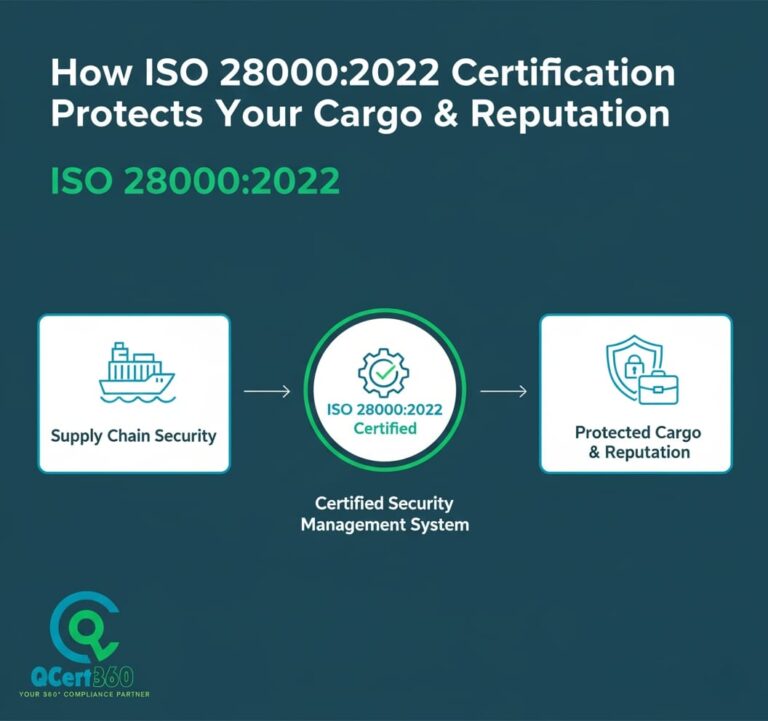
Supply chains are more fragile than ever. Piracy in shipping lanes, theft at ports, cyber-attacks on logistics systems, and even insider threats can disrupt cargo movement and damage reputations overnight. ISO 28000:2022 certification exists to prevent exactly that. It’s a global standard that focuses on supply chain security management—not just keeping goods safe, but also making sure organizations remain trusted partners in international trade.
Let’s break down what this certification really means, why companies are prioritizing it, and how it helps safeguard both cargo and brand reputation.
The global demand for wearables and Internet of Things (IoT) devices has exploded. From fitness trackers and smartwatches to connected medical devices and home automation systems, consumers and businesses expect these products to be safe, reliable, and compliant with international regulations. If you want to sell in the European Union (EU), CE certification is non-negotiable.
Here’s the thing: navigating CE certification for wearables and IoT devices isn’t just a regulatory box to tick. It’s the foundation for market access, consumer trust, and long-term brand success. Let’s break down the CE certification roadmap tailored specifically for startups and established companies in this rapidly growing sector.
Why Cargo Security Is Now a Reputation Issue
A decade ago, cargo security was viewed as a technical problem—locks, seals, and surveillance. Today, it’s a business credibility factor. If goods are tampered with or delayed, clients don’t just see a loss in cargo; they see a supplier they can’t trust.
A single security breach can result in:
- Loss of high-value goods
- Breach of customer contracts
- Regulatory penalties
- Long-term damage to brand trust
For example, a global electronics distributor faced theft of several containers during transit. The incident not only cost millions in lost goods but also led to the cancellation of contracts with two major buyers. What stung most wasn’t the loss of products—it was the hit to their reputation for secure supply chain operations.
This is where ISO 28000:2022 certification shifts the conversation. Instead of reactive fixes, it creates a structured approach to identifying risks, preventing breaches, and assuring partners that the supply chain is secure end-to-end.
What ISO 28000:2022 Really Covers
Many people assume it’s just about physical cargo security. In reality, the standard is broader. It defines requirements for a security management system across all supply chain stages, making sure that risks are identified early, responsibilities are clear, and responses are structured rather than improvised.
- Risk assessment models to identify potential vulnerabilities – These aren’t one-off checklists; they’re ongoing evaluations that adapt to new threats, whether it’s theft, cyber intrusion, or counterfeit goods entering the chain.
- Operational controls to reduce theft, tampering, or illegal interference – From smart seals and surveillance systems to digital access management, these controls create multiple layers of protection around cargo.
- Crisis response plans in case of disruptions – Disruptions aren’t always preventable, but well-designed plans ensure recovery is swift. Whether it’s rerouting shipments or coordinating with customs, companies with certified systems bounce back faster.
- Supplier and partner audits to ensure the entire chain follows security standards – Security is only as strong as the weakest link. Regular audits build accountability across all contractors, logistics partners, and warehouse operators.
- Training programs so staff know how to prevent and respond to threats – Human error is one of the biggest risks in cargo handling. Regular training empowers employees to recognize suspicious activity, respond effectively, and reduce risks before they escalate.
Think of it as a framework that blends logistics security with corporate governance, ensuring cargo safety isn’t left to chance. By embedding security into daily operations and decision-making, ISO 28000:2022 helps organizations treat cargo protection as part of their overall business strategy, not just an isolated logistics task.
Case Study: How ISO 28000 Turned Around a Logistics Firm
A mid-sized logistics company had frequent delays and occasional cargo losses, leading to frustrated clients and mounting financial pressure. They realized ad-hoc security checks weren’t enough to handle growing risks across their supply chain. After pursuing ISO 28000:2022 certification, they committed to a structured transformation that reshaped their entire security approach.
- Conducted a gap analysis of cargo security controls – This helped them identify weak points in storage, transit, and partner operations that were previously overlooked.
- Introduced access control measures at storage facilities – From biometric entry systems to restricted zones, these steps ensured only authorized personnel could handle sensitive shipments.
- Deployed digital monitoring to track shipments in real time – GPS-enabled tracking and automated alerts reduced blind spots in transit, making theft or tampering attempts easier to detect.
- Trained staff on emergency response protocols – Employees across warehousing, transport, and administration were trained to respond to crises quickly and consistently, minimizing downtime.
The results? Within 18 months, incidents of tampering dropped to zero, operational efficiency improved, and insurance premiums fell by 12% thanks to proven risk reduction. Most importantly, the company signed two new contracts with multinational clients who explicitly stated that their decision was influenced by the firm’s ISO-certified supply chain security. What began as a response to cargo losses evolved into a competitive advantage, proving that robust certification not only protects assets but also builds lasting client trust.
Why Reputation Protection Is Just as Important as Cargo Safety
Cargo can be replaced. Reputation cannot. In global trade, buyers, governments, and insurers all scrutinize how well suppliers handle security risks. ISO 28000 gives them confidence that you’ve invested in a globally recognized framework for protecting shipments.
This matters most in competitive tenders. Increasingly, procurement teams ask for evidence of certified supply chain risk management systems. Without ISO 28000, companies’ risk being disqualified from high-value contracts.
Key Benefits of ISO 28000:2022 Certification
- Prevents financial losses – by minimizing theft, delays, and insurance claims.
With structured security controls in place, companies reduce the likelihood of costly incidents and unplanned disruptions. - Builds customer trust – proof of compliance with a global cargo security standard.
Certification shows clients that shipments are safeguarded, strengthening confidence and long-term relationships. - Improves regulatory alignment – aligns with customs and cross-border security expectations.
The framework helps organizations meet complex trade security requirements, avoiding delays and compliance issues. - Strengthens resilience – organizations can respond quickly to disruptions.
Tested response plans ensure continuity, allowing companies to recover faster when faced with unexpected challenges. - Boosts competitiveness – certified firms often win contracts over uncertified rivals.
ISO 28000 certification signals reliability in tenders, giving organizations a clear edge in securing new business.
How ISO 28000 Integrates with Other Standards
ISO 28000 doesn’t work in isolation. It complements others:
- ISO 9001 for quality management – ensuring that security processes are consistently applied with measurable quality outcomes.
- ISO 22301 for business continuity – helping organizations maintain operations during disruptions or crises.
- ISO 27001 for information security – protecting sensitive digital systems that support cargo tracking and logistics operations.
- ISO 45001 for occupational health and safety – safeguarding the workforce that directly handles cargo and logistics security activities.
- ISO 14001 for environmental management – aligning supply chain practices with sustainability goals while maintaining secure operations.
This integration is powerful. For instance, cargo tracking systems often handle sensitive customer data. By aligning ISO 28000 with ISO 27001, companies protect both the cargo and the digital systems supporting it. Similarly, combining ISO 28000 with ISO 22301 strengthens continuity during disruptions, while links with ISO 45001 and ISO 14001 demonstrate that a company manages security without neglecting worker safety or environmental responsibilities.
What Makes ISO 28000:2022 Different from Earlier Versions
The 2022 revision sharpened its focus on modern risks, reflecting how supply chains have evolved in complexity. Beyond physical theft, it addresses challenges that were either overlooked or less prominent in earlier editions, making the standard far more relevant to today’s global trade environment.
- Cyber threats to logistics platforms – Digital systems now control routing, cargo tracking, and customs documentation. A breach here can halt operations entirely, so the standard emphasizes strong cybersecurity measures.
- Counterfeit goods infiltration – Criminal networks increasingly attempt to introduce fake products into legitimate supply chains. ISO 28000:2022 builds controls to detect, prevent, and remove such risks before they reach customers.
- Supply chain terrorism risks – With global trade routes being potential targets, the standard now incorporates proactive planning and security measures to reduce exposure to large-scale threats.
- Resilience in the face of pandemics and global crises – Recent disruptions highlighted how vulnerable supply chains can be. The revised standard requires organizations to prepare not only for local incidents but also for worldwide disruptions.
This future-facing approach makes certification even more valuable, as it demonstrates that a company is not only managing current risks but is also prepared for emerging threats that could disrupt cargo flows and business reputation in the years ahead.
Case Study: Cargo Security in High-Risk Routes
A shipping operator that frequently moved goods through piracy-prone waters used to rely heavily on private security escorts. While effective, it was costly. With ISO 28000, they redesigned their supply chain security management system, using route risk analysis, secure port partnerships, and remote cargo tracking. Within two years, piracy incidents fell drastically, and insurance providers offered reduced premiums thanks to certified risk mitigation practices.
The ISO 28000 Certification Journey: What Companies Can Expect
The path to ISO 28000 certification usually follows a clear and structured process that helps organizations build a strong foundation for supply chain security.
- Gap analysis – comparing current practices against ISO 28000 requirements.
This first step highlights vulnerabilities in existing processes and shows where security controls fall short. It acts as a roadmap for what needs to be improved before moving forward. - System design – implementing security controls, policies, and monitoring.
Once gaps are identified, companies establish formal policies, introduce operational measures such as access control and tracking, and set up monitoring systems to ensure compliance on a daily basis. - Training and awareness – preparing staff across logistics, procurement, and operations.
Certification isn’t just about technology or documents. Employees play a critical role, so regular training ensures they understand security protocols and how to react to threats or disruptions. - Audit and certification – third-party assessment for compliance.
Finally, an accredited certification body reviews the organization’s practices, verifies that requirements are met, and awards ISO 28000 certification when standards are satisfied.
Most organizations complete this within 2–4 months, depending on supply chain complexity. Smaller firms with simpler logistics may move faster, while larger or multinational operations typically require more time to standardize practices across all sites and partners. The journey may seem intensive, but each step builds confidence, both internally and with clients, that supply chain risks are being managed to the highest international level.
Why Insurers and Buyers Prefer ISO 28000 Certified Suppliers
Insurance companies often reduce premiums for certified firms because risks are measurably lower. When an organization follows ISO 28000, it proves that cargo is protected by structured security controls, monitoring systems, and tested response plans. This lowers the likelihood of claims, giving insurers confidence to reward certified firms with better terms and reduced costs.
Buyers, too, treat certification as a filter for reliable suppliers. In competitive procurement, risk management is just as important as pricing. Clients want assurance that their goods won’t be delayed, tampered with, or compromised. Certification provides that assurance upfront, signalling that a supplier can be trusted to deliver securely and consistently.
In high-value cargo markets, ISO 28000 has become a silent qualifier—without it, you may never even be considered. For many buyers, the presence or absence of certification acts as an invisible gatekeeper. Firms with ISO 28000 move straight to the shortlist, while uncertified suppliers are often eliminated before negotiations even begin. In this way, certification doesn’t just protect cargo—it directly shapes business opportunities.
Looking Ahead: The Future of Secure Supply Chains
With rising geopolitical risks and digital threats, secure cargo management is no longer optional. ISO 28000:2022 provides a globally recognized, structured approach that proves to clients, regulators, and insurers that your organization takes both cargo and reputation seriously.
Companies that adopt it early aren’t just avoiding risks—they’re building stronger trust and long-term competitive advantage.
Why Qcert360 Is the Best ISO 28000 certification provider?
Qcert360 stands out because we don’t just guide you to certification—we help you build lasting value. Our experts combine deep knowledge of international standards with practical industry experience, making the ISO 28000 journey smooth and effective. From gap analysis to audit readiness, we ensure your supply chain security system is robust, compliant, and trusted by insurers and buyers. With Qcert360, certification becomes a competitive advantage, not just a compliance exercise.
FAQs on ISO 28000:2022 Certification
- What does ISO 28000:2022 focus on?
It focuses on supply chain security management, ensuring organizations identify, control, and mitigate risks to cargo. - Is ISO 28000 mandatory?
It isn’t mandatory, but it is often requested in procurement contracts and helps in risk-sensitive industries. - Who should get ISO 28000 certified?
Logistics providers, manufacturers, exporters, importers, and even port operators benefit from certification. - How long does ISO 28000 certification take?
Typically 2–4 months, depending on the complexity of the supply chain. - What’s new in the 2022 revision?
It now includes cyber risks, counterfeit goods, terrorism, and global disruption resilience. - Does ISO 28000 overlap with ISO 9001?
They complement each other—ISO 9001 focuses on quality, while ISO 28000 focuses on security. - Can ISO 28000 reduce insurance costs?
Yes, insurers often reduce premiums for certified firms because their risk exposure is lower. - Does it cover digital threats?
Yes, the 2022 update recognizes cyber risks to logistics systems. - How does it protect reputation?
By showing clients and regulators that security is proactively managed, reducing reputational risks from breaches. - Is ISO 28000 certification recognized globally?
Yes, it is internationally recognized and applicable across borders.
Our Services
ISO Standards
- ISO 9001 Certification
- ISO 14001 Certification
- ISO 45001 Certification
- ISO 22000 Certification
- ISO 17025 Certification
- ISO 27001 Certification
- ISO 13485 Certification
- ISO 20000-1 Certification
- ISO 41001 Certification
- ISO 22716 Certification
- ISO 50001 Certification
- ISO 22301 Certification
- ISO 29993 Certification
Product Certifications
Other international standards
- FSSC 22000 Certification
- HIPAA
- HACCP Certification
- SA 8000 Certification
- GMP Certification
- GDPR
- GDP Certification
- GLP Certification
- Certificate of Conformity
QCert360 provides a wide range of services including ISO certification, audit support, compliance consulting, and training. They specialize in helping businesses achieve global standards and certifications like ISO 9001, ISO 27001, ISO 14001, and many others. Their team ensures a seamless experience from consultation to certification, supporting clients at every stage.
The time it takes to achieve certification can vary depending on the complexity of the standard and the readiness of your organization. On average, it takes about 3 to 6 months. QCert360 works closely with clients to streamline the process, ensuring that all requirements are met efficiently and within a reasonable timeline.
QCert360 is a trusted partner with years of experience in helping businesses obtain international certifications. Their expert consultants provide tailored solutions, ensuring your organization not only meets but exceeds industry standards. With a customer-centric approach, they focus on offering end-to-end support to simplify the certification journey.
QCert360 serves a wide range of industries including manufacturing, healthcare, information technology, education, and services, among others. They customize their certification solutions to meet the unique requirements of each industry, ensuring relevance and compliance with global standards.
Yes, QCert360 provides ongoing support even after certification. They offer services like surveillance audits, recertification guidance, and consultancy to help maintain and improve your certification status. Their team ensures that your organization stays compliant and up-to-date with any changes in certification standards.
Getting started with QCert360 is simple. You can contact them via their website to request a consultation. Their team will assess your needs, discuss the best certification options for your business, and outline the steps involved. From there, they’ll guide you through the entire process, ensuring you’re prepared for certification.
QCert360 stands out due to its customer-focused approach, industry expertise, and comprehensive service offerings. Their team doesn’t just help you obtain certification but works to ensure your organization thrives in compliance with international standards. They also offer personalized consultation, making the process smoother and more efficient, ensuring long-term success for your business.
The cost of certification varies depending on factors such as the type of certification, the size and complexity of your organization, and the specific industry requirements. QCert360 offers competitive pricing and provides tailored quotes based on your unique needs. They ensure transparency and work with you to find the most cost-effective solution for your certification goals.
Yes, QCert360 offers internal audit services to help assess and improve your organization’s processes. Their expert auditors conduct thorough reviews of your systems and operations to ensure they meet required standards. They also provide actionable recommendations to help enhance efficiency and compliance, making sure you’re fully prepared for external audits.
If your organization doesn’t pass an audit or certification assessment, QCert360 works with you to understand the reasons for non-compliance and provides support to rectify the issues. They offer guidance on corrective actions and help you prepare for a re-assessment. Their goal is to ensure your organization meets the necessary standards for certification, and they will be by your side to make the process as smooth as possible.