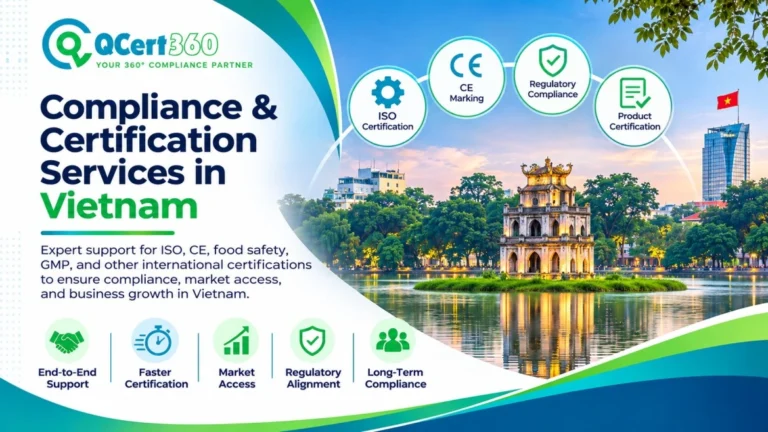
Compliance & Certification Services in Vietnam
Vietnam has become one of Southeast Asia’s most attractive destinations for global business. Its fast-growing economy, young workforce, expanding export base and place inside ASEAN trade networks make it a natural hub for manufacturers, technology firms and service providers. Yet the same growth has brought a dense and fast-changing rulebook. Companies operating in Vietnam must satisfy national laws, sector-specific technical regulations and the expectations of international buyers at the same time. Compliance certification in Vietnam is how a business proves, with independent evidence, that it meets those expectations.
Vietnam’s authorities place strong emphasis on consumer protection, product safety, environmental stewardship and data security. Foreign investors, in particular, often meet layered procedures covering licensing, product conformity, labor documentation and data governance. Professional compliance services in Vietnam turn that complexity into a structured plan: gap analysis, documentation, internal audits and audit readiness for management system certification. QCert360 supports organizations through exactly this journey, so permits, certifications and market access are secured efficiently and without avoidable rework.
Manufacturing is a major driver of the economy, with textiles and garments, electronics, food processing, furniture, medical devices and pharmaceuticals leading exports. Each of these sectors is held to specific standards, from TCVN national standards and QCVN technical regulations to international benchmarks such as ISO 9001, ISO 22000 and ISO 13485. Certification gives buyers in Europe, North America, Japan and Korea confidence in your quality, safety and governance. In a global marketplace, being certified signals quality, responsibility and long-term commitment.
Vietnam-Focused Compliance & Certification Services
QCert360 helps Vietnamese and foreign-owned organizations prepare for and maintain the standards that matter most in the market:
- ISO 9001:2015 quality management system
- ISO 14001:2015 environmental management system
- ISO 45001:2018 occupational health and safety
- ISO/IEC 27001:2022 information security management
- ISO/IEC 27701 privacy information management
- ISO/IEC 42001 artificial intelligence management system
- ISO 22000, HACCP and GMP food and pharmaceutical safety
- ISO 13485 medical devices
- CE marking for exports to the European Economic Area
- SOC 2 and GDPR readiness for technology and outsourcing providers
Why Is Compliance Critical for Businesses in Vietnam?
Vietnam attracts more domestic and foreign enterprises every year, and its regulatory expectations rise in step. Following the rules that apply to your business is therefore more important than ever. Strong compliance helps organizations avoid administrative fines, suspended licenses, customs delays and legal disputes. It also protects reputation and builds trust with customers, partners, lenders and investors. Whether the issue is correct tax reporting under Ministry of Finance rules, employment contracts under the Labor Code 2019, wastewater and emissions limits under the Law on Environmental Protection 2020, or workplace safety under the Law on Occupational Safety and Hygiene 2015, every requirement counts.
The government is also aligning domestic regulation with international practice, supported by trade agreements such as CPTPP, EVFTA and RCEP. Businesses must therefore be ready to meet local and global expectations, especially when supplying multinational brands or expanding abroad. Compliance is not simply about obeying the law. It keeps operations running smoothly, reduces risk and enables responsible growth. Organizations that treat compliance seriously tend to outlast those that do not, and a robust compliance system is one of the smartest investments a company can make in Vietnam.
Key Regulatory Bodies and Accreditation Authorities in Vietnam
Several government agencies oversee business compliance, and keeping pace with their updates is essential for anyone pursuing compliance certification in Vietnam.
- Ministry of Science and Technology (MOST) – Leads policy on standards, technical regulations, product quality and conformity assessment. Its Directorate for Standards, Metrology and Quality (STAMEQ) runs the national standards system and the conformity assessment registry.
- National Accreditation Bureau (BoA) – Vietnam’s accreditation body, formerly the Bureau of Accreditation, now operating under STAMEQ. BoA accredits certification bodies, inspection bodies and laboratories, including through the Vietnam Certification Accreditation Scheme (VICAS).
- Ministry of Finance (MOF) – Oversees taxation, accounting standards and financial reporting, and, following the 2025 government restructuring, also covers planning and investment functions previously held by the Ministry of Planning and Investment (MPI), including business registration and foreign investment licensing.
- Ministry of Industry and Trade (MOIT) – Regulates commerce, industrial safety and trade practices, including e-commerce and market conduct.
- State Bank of Vietnam (SBV) – Supervises banks, payment services and monetary policy.
- State Securities Commission (SSC) – Supervises securities markets and disclosure by listed companies.
- Ministry of Public Security (MPS) – Its cybersecurity and high-tech crime department (A05) handles cybersecurity and personal data protection oversight.
- Ministry of Health, Ministry of Agriculture and Environment, and Ministry of Home Affairs – Govern food and drug safety, environmental permits and labor matters respectively.
Product certification in Vietnam is also carried out by conformity assessment bodies registered with STAMEQ, including the QUATEST centers and QUACERT, using the CR mark for products covered by QCVN technical regulations. As requirements grow more detailed, many international companies now work with consultants like QCert360 to interpret local standards and prepare evidence the right way.
Vietnam’s Key Laws and Regulations Behind Compliance
Vietnam’s legal landscape changed substantially between 2025 and 2026, and anyone relying on older guidance risks being out of date. The laws below shape most certification and compliance programs:
- Law on Product and Goods Quality (Law No. 78/2025/QH15) – Introduces risk-based classification of products, stronger market surveillance and traceability, with Decree 37/2026/ND-CP and Ministry circulars setting out conformity assessment, labeling and digital product passport rules.
- Law on Standards and Technical Regulations – Establishes TCVN voluntary standards and QCVN mandatory technical regulations, and the framework for conformity declarations and certification.
- Law on Personal Data Protection (No. 91/2025/QH15) – In force since 1 January 2026 with Decree 356/2025/ND-CP, replacing Decree 13/2023/ND-CP. It distinguishes basic from sensitive personal data and sets duties for consent, impact assessment and cross-border transfers.
- Law on Data 2024 – Effective 1 July 2025, regulating data processing and defining important and core data.
- Cybersecurity Law 2025 (No. 116/2025/QH15) – Effective 1 July 2026, consolidating the earlier Cybersecurity Law and the Law on Network Information Security, with data localization duties for covered online service providers.
- Law on Artificial Intelligence 2025 and Law on Digital Technology Industry 2025 – New frameworks for AI governance and digital sector development.
- Labor Code 2019 and Law on Occupational Safety and Hygiene 2015 – Contracts, working hours, benefits and workplace safety duties.
- Law on Environmental Protection 2020 (with Decree 08/2022/ND-CP) – Environmental permits, waste management and emissions rules.
- Law on Food Safety 2010 – Licensing and safety requirements for food producers.
- Law on Enterprises 2020, Law on Investment 2020 and Law on Consumer Protection 2023 – Corporate, investment and consumer obligations.
Because several of these instruments took effect within months of each other, businesses should confirm current applicability with qualified Vietnamese counsel before acting.
Common Compliance Challenges for Businesses in Vietnam
Companies in Vietnam face several recurring difficulties, and knowing them early makes compliance certification in Vietnam easier to plan.
- Regulatory Complexity – Decrees, circulars and guidance change frequently, so requirements that were valid last year may already have been replaced.
- Language Barriers – Official texts are published in Vietnamese, and foreign companies struggle with accurate translation and interpretation of legal terms.
- Tax and Accounting Compliance – Reporting under Vietnamese Accounting Standards (VAS), e-invoicing and tax filing demand local expertise.
- Labor Documentation – Employment contracts, social insurance and workplace safety records must follow strict formats to avoid penalties.
- Data Governance – New personal data and cybersecurity rules require updated policies, impact assessments and technical controls.
Because of these hurdles, certification becomes a strategic priority. Clear processes and current legal knowledge are what separate smooth audits from costly delays.
Understanding Major Compliance Standards in Vietnam
Vietnam’s economy now demands adherence to both national and global standards. The most important are:
- TCVN and QCVN – National standards and mandatory technical regulations governing products, safety and quality.
- Vietnamese Accounting Standards (VAS) – The financial reporting framework that supports transparency across sectors.
- ISO management system standards – ISO 9001, 14001, 45001, 22000, 27001 and 13485, widely required by multinational buyers.
- Environmental Compliance – Environmental impact assessment and environmental permit requirements under the Law on Environmental Protection 2020.
- Data Protection and Cybersecurity – Personal data protection and cybersecurity obligations, supported by ISO/IEC 27001 and 27701 controls.
- VietGAP, GMP and HACCP – Agricultural, manufacturing and food safety practice standards for producers and processors.
- Industry-specific approvals – For example, pharmaceutical and medical device firms need specialized registration before market entry.
Procedures should be reviewed regularly, since inspections and audits happen on a recurring basis. Understanding these standards remains essential for sustainable operations.
How QCert360 Makes a Difference in Compliance for Business in Vietnam
Compliance matters more each year as Vietnamese companies partner with customers abroad and global standards become a condition of doing business. Many organizations find the rules and certification routes hard to interpret. QCert360 makes them easier to understand and manage. We guide clients through ISO 9001, ISO 14001, ISO 45001, ISO/IEC 27001, ISO/IEC 27701, ISO 22000, ISO 13485 and related schemes, supporting each stage: planning, documentation, internal audit, audit readiness and ongoing follow-up. Many small and medium-sized enterprises lack in-house specialists or time, so we simplify the process and keep it practical.
Instead of a one-size-fits-all method, QCert360 builds solutions around each client’s sector, size and goals. We combine global certification knowledge with an understanding of how Vietnamese businesses operate, including how TCVN, QCVN, BoA-accredited certification bodies and ministry requirements fit together. That means our advice is both technically sound and workable on the factory floor or in the office. By working with QCert360, organizations do more than prepare for an audit; they build safer, better and more trustworthy operations. Training, advisory support and regular check-ins help teams grow with confidence, and certification becomes a strategic advantage.
Industries in Vietnam That Benefit Most from Compliance
Rapid industrial growth calls for structured regulatory adherence in key sectors:
- Textiles, Garments and Footwear – Export brands demand quality, social and environmental compliance from suppliers around Ho Chi Minh City, Hanoi and Hai Phong.
- Electronics and Electrical Equipment – Manufacturers in Bac Ninh, Hai Phong and the Hoa Lac and Saigon Hi-Tech Parks need quality, safety and information security credentials, plus CR mark conformity where QCVN applies.
- Food and Beverage, Seafood and Agriculture – Exporters rely on ISO 22000, HACCP, GMP and VietGAP to satisfy health regulators and overseas retailers.
- Pharmaceutical and Medical Devices – Producers must meet strict quality and safety standards, including GMP and ISO 13485, to reach domestic and international markets.
- Financial Services and Fintech – Banks and payment firms face extensive SBV oversight and benefit from ISO/IEC 27001 and strong data governance.
- IT Outsourcing, Software and Data Services – Providers serving global clients need ISO/IEC 27001, ISO/IEC 27701, SOC 2 and, increasingly, ISO/IEC 42001.
- Hospitality and Tourism – Hotels and tour operators in Da Nang, Hanoi, Ho Chi Minh City and Nha Trang strengthen guest trust through safety and quality certification.
These industries depend heavily on audit and certification services in Vietnam to align business processes with national and international benchmarks. Compliant firms usually face fewer disruptions, which makes compliance a competitive advantage rather than merely an obligation.
Emerging Compliance Trends in Vietnam for 2027
As globalization accelerates and new laws take effect, compliance expectations in Vietnam are moving quickly.
- Risk-Based Product Oversight – The amended product quality framework classifies goods by risk, with stronger traceability, electronic labels and digital product passports.
- Stricter Data and Cybersecurity Rules – The Personal Data Protection Law, Data Law and Cybersecurity Law raise expectations for consent, localization and breach management.
- AI Governance – With a national Law on Artificial Intelligence in place, ISO/IEC 42001 is gaining attention as a way to evidence responsible AI.
- ESG Integration – Buyers and investors increasingly expect environmental, social and governance performance, including emissions and sustainability reporting.
- Recognition of Foreign Conformity Results – Updated Ministry of Science and Technology rules on accepting foreign conformity assessment results may ease market entry for some products.
- Digital Compliance Tools – Automated systems for tracking obligations, evidence and audit findings are becoming standard.
Together these trends point toward proactive, technology-enabled compliance management, making certification more dynamic and more essential.
Steps to Achieve Compliance Certification in Vietnam
To obtain compliance certification in Vietnam, follow a clear and organized process that covers general legal rules and sector-specific requirements:
- Identify Applicable Requirements – Determine which laws, TCVN or QCVN rules and international standards apply, such as ISO 9001, ISO 27001, ISO 22000 or CE marking.
- Conduct a Gap Analysis – Compare current practices against requirements to see where you comply and where you do not.
- Build Policies and Procedures – Document processes that satisfy legal, quality and security expectations and earn partner trust.
- Implement Controls – Introduce technical, operational and risk management controls, including data protection safeguards aligned with Vietnamese law.
- Train Employees – Ensure every team member understands their responsibilities, since training sustains compliance.
- Run Internal Audits and Management Review – Find and fix issues before the certification audit by a BoA-accredited or otherwise recognized certification body.
- Maintain and Adapt – Track legal changes, update policies and prepare for surveillance audits.
Failing to secure mandatory approvals can stall operations or block market access, so keep these steps in view from day one.
QCert360: Your Compliance Ally for Success and Expansion in Vietnam
Expanding into Vietnam is a smart move, but it carries real responsibilities, and the biggest challenge is understanding and following local rules. QCert360 offers clear, practical support so your business meets legal and industry expectations whether you are just entering the market or scaling operations. Our services span ISO management systems, internal audits, data protection, environmental and safety programs and product conformity guidance across industries.
Our team follows Vietnam’s regulatory changes closely so that unexpected updates do not disrupt your plans. You focus on running the business while we handle the compliance groundwork. The result is more than avoided fines or delays: you build trust with customers, partners and investors and lay a foundation for lasting success. QCert360 turns compliance from a challenge into an advantage. To learn how to obtain compliance certification in Vietnam with expert guidance, contact QCert360 today.
Our Services
ISO Standards
- ISO 9001 Certification
- ISO 14001 Certification
- ISO 45001 Certification
- ISO 22000 Certification
- ISO 17025 Certification
- ISO 27001 Certification
- ISO 13485 Certification
- ISO 20000-1 Certification
- ISO 41001 Certification
- ISO 22716 Certification
- ISO 50001 Certification
- ISO 22301 Certification
- ISO 29993 Certification
Product Certifications
Other international standards
- FSSC 22000 Certification
- HIPAA
- HACCP Certification
- SA 8000 Certification
- GMP Certification
- GDPR
- GDP Certification
- GLP Certification
- Certificate of Conformity
QCert360 provides a wide range of services including ISO certification, audit support, compliance consulting, and training. They specialize in helping businesses achieve global standards and certifications like ISO 9001, ISO 27001, ISO 14001, and many others. Their team ensures a seamless experience from consultation to certification, supporting clients at every stage.
The time it takes to achieve certification can vary depending on the complexity of the standard and the readiness of your organization. On average, it takes about 3 to 6 months. QCert360 works closely with clients to streamline the process, ensuring that all requirements are met efficiently and within a reasonable timeline.
QCert360 is a trusted partner with years of experience in helping businesses obtain international certifications. Their expert consultants provide tailored solutions, ensuring your organization not only meets but exceeds industry standards. With a customer-centric approach, they focus on offering end-to-end support to simplify the certification journey.
QCert360 serves a wide range of industries including manufacturing, healthcare, information technology, education, and services, among others. They customize their certification solutions to meet the unique requirements of each industry, ensuring relevance and compliance with global standards.
Yes, QCert360 provides ongoing support even after certification. They offer services like surveillance audits, recertification guidance, and consultancy to help maintain and improve your certification status. Their team ensures that your organization stays compliant and up-to-date with any changes in certification standards.
Getting started with QCert360 is simple. You can contact them via their website to request a consultation. Their team will assess your needs, discuss the best certification options for your business, and outline the steps involved. From there, they’ll guide you through the entire process, ensuring you’re prepared for certification.
QCert360 stands out due to its customer-focused approach, industry expertise, and comprehensive service offerings. Their team doesn’t just help you obtain certification but works to ensure your organization thrives in compliance with international standards. They also offer personalized consultation, making the process smoother and more efficient, ensuring long-term success for your business.
The cost of certification varies depending on factors such as the type of certification, the size and complexity of your organization, and the specific industry requirements. QCert360 offers competitive pricing and provides tailored quotes based on your unique needs. They ensure transparency and work with you to find the most cost-effective solution for your certification goals.
Yes, QCert360 offers internal audit services to help assess and improve your organization’s processes. Their expert auditors conduct thorough reviews of your systems and operations to ensure they meet required standards. They also provide actionable recommendations to help enhance efficiency and compliance, making sure you’re fully prepared for external audits.
If your organization doesn’t pass an audit or certification assessment, QCert360 works with you to understand the reasons for non-compliance and provides support to rectify the issues. They offer guidance on corrective actions and help you prepare for a re-assessment. Their goal is to ensure your organization meets the necessary standards for certification, and they will be by your side to make the process as smooth as possible.