
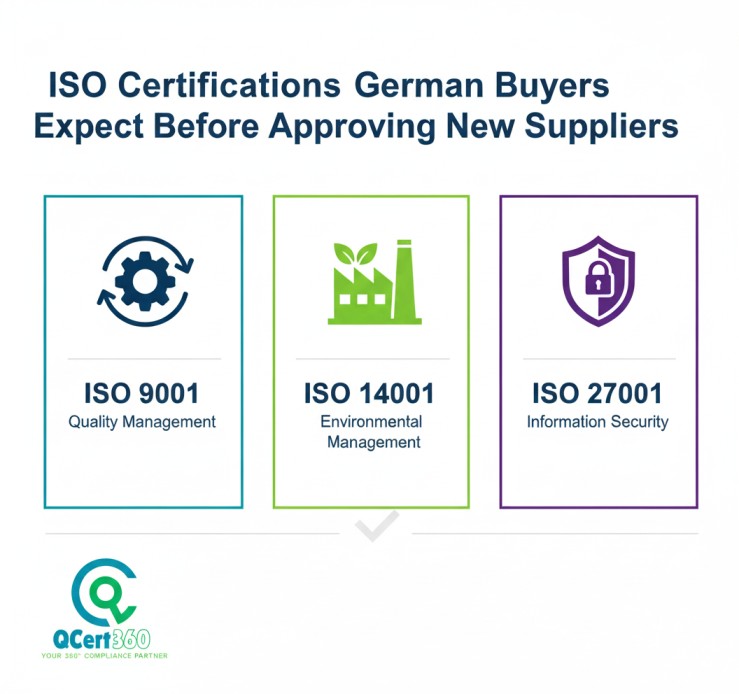
If you’ve ever tried to break into the German market, you already know how demanding buyers can be. They don’t just look at pricing or delivery timelines. They want proof — documented, audited, internationally recognized proof — that you run your operations with discipline. That’s why ISO certification for German buyers isn’t just helpful; it’s practically a pass to enter the room.
Here’s the thing: Germany’s supply chain culture is built on reliability. Whether you’re supplying components to a mid-sized manufacturer in Stuttgart or exporting finished products to Hamburg, buyers expect a level of operational maturity backed by globally accepted standards. That’s where ISO compliance for Germany comes into play.
Let’s break it down step by step so you know exactly which certifications matter, why they matter, and how to get them without drowning in paperwork.
Why German Procurement Teams Rely Heavily on ISO Standards
If German companies are known for one thing, it’s precision. Their procurement teams follow the same philosophy. They don’t want uncertainty in their supply chain, and ISO certification helps them filter out risky vendors early in the evaluation stage.
You’ll often see ISO requirements mentioned in supplier qualification documents, vendor onboarding forms, and even pre-bid questionnaires. Many German companies won’t even consider new suppliers unless they meet specific ISO requirements aligned with their sector. This is especially true for industries focused on safety, sustainability, quality, and cybersecurity.
And let’s be honest: competing without these certifications is like trying to run a marathon wearing flip-flops.
ISO 9001: The Entry Ticket for Most German Buyers
If there’s one certification you can’t afford to skip, it’s ISO 9001 quality management. Think of it as the universal baseline. Whether you’re supplying metal parts, electronics, logistics support, or food ingredients, German companies expect consistent quality — and they want to see a system that proves it.
Most German procurement teams include ISO 9001 in their vendor selection checklist because it shows you can document processes, manage risks, handle customer complaints properly, and deliver the same output every time.
For many suppliers, ISO 9001 becomes the first step toward long-term contracts in Germany. Without it, you’ll struggle to compete.
ISO 14001: Sustainability Is Not Optional in Germany
Germany is one of the strongest advocates of environmental responsibility in Europe. That’s why ISO 14001 environmental management is increasingly becoming a requirement, especially if you’re dealing with industrial, manufacturing, or export-driven buyers.
German companies face strict regulations under the EU Green Deal, so they expect their suppliers to follow eco-friendly practices too. When you show documented compliance through ISO 14001, you immediately score points in sustainability audits and supplier ranking systems.
ISO 45001: Worker Safety Matters to German Procurement Teams
Worker safety is another big one. German manufacturers, logistics companies, and industrial buyers need suppliers who manage occupational risks well.
So if you’re operating in construction materials, heavy machinery, chemicals, metal fabrication, or similar fields, ISO 45001 occupational health and safety will strengthen your supplier profile dramatically.
It shows you’re not just running a business — you’re running it responsibly.
ISO 27001: Cybersecurity Is Now a Top Procurement Requirement
German buyers are extremely cautious about data breaches. Whether you exchange production files, CAD drawings, or customer data, you must prove your digital environment is secure.
That’s why ISO 27001 cybersecurity compliance has become a priority in vendor risk assessments. Many German OEMs now require it before allowing new suppliers to access portals, design documents, or digital platforms.
If you’re in tech, SaaS, electronics manufacturing, BPO, or any industry managing digital assets, ISO 27001 will place your company in a stronger, more trusted position.
German companies increasingly search for terms like secure suppliers for Germany and ISO-certified vendors for EU markets, so having strong digital risk controls helps you rise to the top.
German Regulations That Influence ISO Requirements
German procurement rules are shaped by strict national and EU-level regulations. These laws push buyers to choose suppliers who follow structured, audited systems — which is why ISO-certified vendors often get priority. Regulations linked to product safety, environmental impact, worker protection, and data privacy play a direct role in supplier evaluations.
Germany’s Environmental Rules and ISO 14001
Germany has some of the toughest environmental laws in Europe, including the Circular Economy Act and strict emission controls. These regulations make ISO 14001 especially valuable because it shows you can manage waste, reduce environmental risks, and meet sustainability expectations set by German authorities.
Worker Safety Compliance Under German Law
German occupational safety regulations require employers to follow structured health and safety practices. Because buyers want suppliers who align with these expectations, ISO 45001 becomes an easy way to demonstrate compliance with Germany’s safety culture.
German Cybersecurity and Data Protection Rules
Germany follows GDPR with additional federal data protection laws, making cybersecurity a major concern in supplier onboarding. This is why ISO 27001, ISO 27701, and cloud-security standards fit naturally into German compliance expectations, especially when suppliers handle sensitive files or customer information.
Germany’s Supply Chain Due Diligence Act (LkSG)
This law requires German companies to monitor and mitigate risks across their entire supply chain. As a result, they prefer suppliers who follow documented international standards. ISO 9001, ISO 14001, and ISO 45001 help them meet due-diligence obligations and reduce operational risk.
Product-Specific Regulations Driving Sector ISO Requirements
German manufacturing, automotive, chemical, and food industries follow strict technical rules and product laws. These regulations line up with specialized ISO standards like ISO 13485, ISO 17025, ISO 22000, and IATF 16949 — making certification a practical necessity for suppliers in those sectors.
Sector-Specific ISO Certifications German Buyers Look For
Beyond the core standards, certain industries demand more specialized certifications.
Here’s a quick overview:
For Food, Packaging, and Ingredients
- ISO 22000 / HACCP
German food importers and distributors expect strict food safety controls.
For Medical Devices or Consumables
- ISO 13485
Without this, you won’t get far with German hospitals or medical distributors.
For Laboratories
- ISO 17025
Required when you’re providing test reports or calibration services.
For IT and Cloud Services
- ISO 27701 (privacy)
- ISO 27017 / ISO 27018 (cloud security)
These are becoming essential due to GDPR-driven compliance expectations.
For Manufacturing & Engineering
- IATF 16949 for automotive suppliers
- ISO 50001 for energy management
- ISO 22301 for business continuity
- CE Mark for Branding
- RoHS for Electronics
Buyers prefer suppliers who minimize operational disruptions and energy waste. These certifications prove you’re serious about long-term performance.
Real-World Case Study: How One Supplier Won a German Contract After ISO Certification
A mid-sized electronics manufacturer in the Middle East approached Qcert360 because they kept failing supplier evaluations from multiple German buyers. Their products were good, pricing was competitive, but every time procurement teams reviewed their documentation, the same issue surfaced:
They had no ISO 9001, no structured quality management, and no cybersecurity framework.
German companies flagged them as “high risk.”
Here’s what happened next:
- Qcert360 conducted a full gap analysis of their processes.
- The team created a simple, practical roadmap for ISO 9001 and ISO 27001.
- Documentation, training, implementation, risk assessments, and audits were completed in 12 weeks.
- The company passed certification on the first attempt.
- Within two months of submitting their ISO certificates, they secured a long-term supply contract with a German industrial buyer.
What this really means is that ISO certification wasn’t just a compliance exercise. It became the deciding factor in winning a deal they had been chasing for a year.
How Qcert360 Helps You Get Supplier-Ready for German Buyers
Qcert360 has supported hundreds of companies preparing for European supply chain compliance. German buyers have high expectations, so the approach needs to be structured, fast, and clear.
Here’s how we help:
- We evaluate your current processes against German supplier requirements.
- We recommend the exact certifications you need (nothing unnecessary).
- We create documentation that works for your team, not against them.
- We train staff, conduct internal audits, and prepare you for the final certification audit.
- We coordinate the audit with accreditation bodies.
- We support you even after certification to maintain compliance.
If your goal is ISO certification for German buyers, or you want to strengthen your supplier compliance for Germany, Qcert360 is ready to guide you with practical, industry-tested expertise.
Why Getting ISO Certified in Germany Now Gives You a Competitive Edge?
German companies are expanding their supplier networks outside Europe to reduce costs — but only for suppliers who can prove they are reliable. ISO certification becomes your strongest credibility marker.
Once certified, you’ll notice:
- Faster vendor approvals
- Higher trust from procurement teams
- Better contract opportunities
- Improved internal efficiency
- Lower rejection or recall risk
- Stronger compliance with EU regulations
If you’re serious about entering or scaling in the German market, start with the right ISO standards. The earlier you implement them, the easier your expansion becomes.
10 FAQs: SEO-Optimized and Buyer-Focused
- Which ISO certifications do German buyers check first?
ISO 9001 is usually the first requirement, followed by ISO 14001 and ISO 45001 depending on your industry.
- Is ISO 9001 mandatory to work with German companies?
In most sectors, yes. It’s considered the foundation of supplier approval.
- Do German buyers require ISO 27001 for data exchange?
Increasingly, yes. Cybersecurity is a top priority in EU supply chains.
- How important is sustainability for German procurement?
Very important. ISO 14001 boosts your chances of selection significantly.
- Do small businesses need ISO to supply to Germany?
Yes, especially if you’re bidding for long-term or high-value contracts.
- Which ISO standard is needed for food exports to Germany?
ISO 22000 or HACCP is commonly required.
- Do German buyers accept ISO online audits?
Some do, but most prefer hybrid audits for supplier verification.
- How long does ISO certification take in Germany?
Most companies take 8–12 weeks with proper guidance.
- Can Qcert360 support certification for multiple ISO standards?
Absolutely. Many suppliers choose integrated management systems.
- How do I start the ISO certification process for Germany?
Contact Qcert360 for a gap analysis and customized certification roadmap.
Our Services
ISO Standards
- ISO 9001 Certification
- ISO 14001 Certification
- ISO 45001 Certification
- ISO 22000 Certification
- ISO 17025 Certification
- ISO 27001 Certification
- ISO 13485 Certification
- ISO 20000-1 Certification
- ISO 41001 Certification
- ISO 22716 Certification
- ISO 50001 Certification
- ISO 22301 Certification
- ISO 29993 Certification
Product Certifications
Other international standards
- FSSC 22000 Certification
- HIPAA
- HACCP Certification
- SA 8000 Certification
- GMP Certification
- GDPR
- GDP Certification
- GLP Certification
- Certificate of Conformity
QCert360 provides a wide range of services including ISO certification, audit support, compliance consulting, and training. They specialize in helping businesses achieve global standards and certifications like ISO 9001, ISO 27001, ISO 14001, and many others. Their team ensures a seamless experience from consultation to certification, supporting clients at every stage.
The time it takes to achieve certification can vary depending on the complexity of the standard and the readiness of your organization. On average, it takes about 3 to 6 months. QCert360 works closely with clients to streamline the process, ensuring that all requirements are met efficiently and within a reasonable timeline.
QCert360 is a trusted partner with years of experience in helping businesses obtain international certifications. Their expert consultants provide tailored solutions, ensuring your organization not only meets but exceeds industry standards. With a customer-centric approach, they focus on offering end-to-end support to simplify the certification journey.
QCert360 serves a wide range of industries including manufacturing, healthcare, information technology, education, and services, among others. They customize their certification solutions to meet the unique requirements of each industry, ensuring relevance and compliance with global standards.
Yes, QCert360 provides ongoing support even after certification. They offer services like surveillance audits, recertification guidance, and consultancy to help maintain and improve your certification status. Their team ensures that your organization stays compliant and up-to-date with any changes in certification standards.
Getting started with QCert360 is simple. You can contact them via their website to request a consultation. Their team will assess your needs, discuss the best certification options for your business, and outline the steps involved. From there, they’ll guide you through the entire process, ensuring you’re prepared for certification.
QCert360 stands out due to its customer-focused approach, industry expertise, and comprehensive service offerings. Their team doesn’t just help you obtain certification but works to ensure your organization thrives in compliance with international standards. They also offer personalized consultation, making the process smoother and more efficient, ensuring long-term success for your business.
The cost of certification varies depending on factors such as the type of certification, the size and complexity of your organization, and the specific industry requirements. QCert360 offers competitive pricing and provides tailored quotes based on your unique needs. They ensure transparency and work with you to find the most cost-effective solution for your certification goals.
Yes, QCert360 offers internal audit services to help assess and improve your organization’s processes. Their expert auditors conduct thorough reviews of your systems and operations to ensure they meet required standards. They also provide actionable recommendations to help enhance efficiency and compliance, making sure you’re fully prepared for external audits.
If your organization doesn’t pass an audit or certification assessment, QCert360 works with you to understand the reasons for non-compliance and provides support to rectify the issues. They offer guidance on corrective actions and help you prepare for a re-assessment. Their goal is to ensure your organization meets the necessary standards for certification, and they will be by your side to make the process as smooth as possible.